Showing posts with label living. Show all posts

Thursday, May 23, 2024

METASEQUOIA: A LIVING FOSSIL

Autumn is a wonderful time to explore Vancouver. It is a riot of yellow, orange and green. The fallen debris you crunch through send up wafts of earthy smells that whisper of decomposition, the journey from leaf to soil.

It is a wonderful time to be out and about. I do love the mountain trails but must confess to loving our cultivated gardens for their colour and variety. 

We have some lovely native plants and trees and more than a few exotics at Vancouver's arboreal trifecta — Van Dusen, Queen E Park and UBC Botanical Gardens. One of those exotics, at least exotic to me, is the lovely conifer you see here is Metasequoia glyptostroboides — the dawn redwood. 

Of this long lineage, this is the sole surviving species in the genus Metasequoia and one of three species of conifers known as redwoods. Metasequoia are the smaller cousins of the mighty Giant Sequoia, the most massive trees on Earth. 

As a group, the redwoods are impressive trees and very long-lived. The President, an ancient Giant Sequoia, Sequoiadendron giganteum, and granddaddy to them all has lived for more than 3,200 years. While this tree is named The President, a worthy name, it doesn't really cover the magnitude of this giant by half.   

This tree was a wee seedling making its way in the soils of the Sierra Nevada mountains of California before we invented writing. It had reached full height before any of the Seven Wonders of the Ancient World, those remarkable constructions of classical antiquity, were even an inkling of our budding human achievements. And it has outlasted them all save the Great Pyramid of Giza, the oldest and last of those seven still standing, though the tree has faired better. Giza still stands but the majority of the limestone façade is long gone.

Aside from their good looks (which can really only get you so far), they are resistant to fire and insects through a combined effort of bark over a foot thick, a high tannin content and minimal resin, a genius of evolutionary design. 

While individual Metasequoia live a long time, as a genus they have lived far longer. 

Like Phoenix from the Ashes, the Cretaceous (K-Pg) extinction event that wiped out the dinosaurs, ammonites and more than seventy-five percent of all species on the planet was their curtain call. The void left by that devastation saw the birth of this genus — and they have not changed all that much in the 65 million years since. Modern Metasequoia glyptostroboides looks pretty much identical to their late Cretaceous brethren.

Dawn Redwood Cones with scales paired in opposite rows
They are remarkably similar to and sometimes mistaken for Sequoia at first glance but are easily distinguishable if you look at their size (an obvious visual in a mature tree) or to their needles and cones in younger specimens. 

Metasequoia has paired needles that attach opposite to each other on the compound stem. Sequoia needles are offset and attached alternately. Think of the pattern as jumping versus walking with your two feet moving forward parallel to one another. 

Metasequoia needles are paired as if you were jumping forward, one print beside the other, while Sequoia needles have the one-in-front-of-the-other pattern of walking.

The seed-bearing cones of Metasequoia have a stalk at their base and the scales are arranged in paired opposite rows which you can see quite well in the visual above. Coast redwood cone scales are arranged in a spiral and lack a stalk at their base.

Although the least tall of the redwoods, it grows to an impressive sixty meters (200 feet) in height. It is sometimes called Shui-sa, or water fir by those who live in the secluded mountainous region of China where it was rediscovered.

Fossil Metasequoia, McAbee Fossil Beds
Metasequoia fossils are known from many areas in the Northern Hemisphere and were one of my first fossil finds as a teenager. 

And folk love naming them. More than twenty fossil species have been named over time —  some even identified as the genus Sequoia in error — but for all their collective efforts to beef up this genus there are just three species: Metasequoia foxii, Metasequoia milleri, and Metasequoia occidentalis.

During the Paleocene and Eocene, extensive forests of Metasequoia thrived as far north as Strathcona Fiord on Ellesmere Island and sites on Axel Heiberg Island in Canada's far north around 80° N latitude.

We find lovely examples of Metasequoia occidentalis in the Eocene outcrops at McAbee near Cache Creek, British Columbia, Canada. I shared a photo here of one of those specimens. Once this piece dries out a bit, I will take a dental pick to it to reveal some of the teaser fossils peeking out.

The McAbee Fossil Beds are known for their incredible abundance, diversity and quality of fossils including lovely plant, insect and fish species that lived in an old lake bed setting. While the Metasequoia and other fossils found here are 52-53 million years old, the genus is much older. It is quite remarkable that both their fossil and extant lineage were discovered in just a few years of one another. 

Metasequoia was first described as a new genus from a fossil specimen found in 1939 and published by Japanese paleobotanist Shigeru Miki in 1941. Remarkably, the living version of this new genus was discovered later that same year. 

Professor Zhan Wang, an official from the Bureau of Forest Research was recovering from malaria at an old school chum's home in central China. His friend told him of a stand of trees discovered in the winter of 1941 by Chinese botanist Toh Gan (干铎). The trees were not far away from where they were staying and Gan's winter visit meant he did not collect any specimen as the trees had lost their leaves. 

The locals called the trees Shui-sa, or water fir. As trees go, they were reportedly quite impressive with some growing as much as sixty feet tall. Wang was excited by the possibility of finding a new species and asked his friend to describe the trees and their needles in detail. Emboldened by the tale, Wang set off through the remote mountains to search for his mysterious trees and found them deep in the heart of  Modaoxi (磨刀溪; now renamed Moudao (谋道), in Lichuan County, in the central China province of Hubei. He found the trees and was able to collect living specimens but initially thought they were from Glyptostrobus pensilis (水松). 

A few years later, Wang showed the trees to botanist Wan-Chun Cheng and learned that these were not the leaves of s Glyptostrobus pensilis (水松 ) but belonged to a new species. 

While the find was exciting, it was overshadowed by China's ongoing conflict with the Japanese that was continuing to escalate. With war at hand, Wang's research funding and science focus needed to be set aside for another two years as he fled the bombing of Beijing. 

When you live in a world without war on home soil it is easy to forget the realities for those who grew up in it. 

Zhan Wang and his family lived to witness the 1931 invasion of Manchuria, then the 1937 clash between Chinese and Japanese troops at the Marco Polo Bridge, just outside Beijing. 

That clash sparked an all-out war that would grow in ferocity to become World War II. 

Within a year, the Chinese military situation was dire. Most of eastern China lay in Japanese hands: Shanghai, Nanjing, Beijing, Wuhan. As the Japanese advanced, they left a devastated population in their path where atrocity after atrocity was the norm. Many outside observers assumed that China could not hold out, and the most likely scenario was a Japanese victory over China.

Yet the Chinese hung on, and after the horrors of Pearl Harbor, the war became genuinely global. The western Allies and China were now united in their war against Japan, a conflict that would finally end on September 2, 1945, after Allied naval forces blockaded Japan and subjected the island nation to intensive bombing, including the utter devastation that was the Enola Gay's atomic payload over Hiroshima. 

With World War II behind them, the Chinese researchers were able to re-focus their energies on the sciences. Sadly, Wang was not able to join them. Instead, two of his colleagues, Wan Chun Cheng and Hu Hsen Hsu, the director of Fan Memorial Institute of Biology would continue the work. Wan-Chun Cheng sent specimens to Hu Hsen Hsu and upon examination realised they were the living version of the trees Miki had published upon in 1941. 

Hu and Cheng published a paper describing a new living species of Metasequoia in May 1948 in the Bulletin of Fan Memorial Institute of Biology.

That same year, Arnold Arboretum of Harvard University sent an expedition to collect seeds and, soon after, seedling trees were distributed to various universities and arboreta worldwide. 

Today, Metasequoia grow around the globe. When I see them, I think of Wang and all he went through. He survived the conflict and went on to teach other bright, young minds about the bountiful flora in China. I think of Wan Chun Cheng collaborating with Hu Hsen Hsu in a time of war and of Hu keeping up to date on scientific research, even published works from colleagues from countries with whom his country was at war. Deep in my belly, I ache for the huge cost to science, research and all the species impacted on the planet from our human conflicts. Each year in April, I plant more Metasequoia to celebrate Earth Day and all that means for every living thing on this big blue orb.  

References: 

  • https://web.stanford.edu/group/humbioresearch/cgi-bin/wordpress/?p=297
  • https://humboldtredwoods.org/redwoods

Sunday, January 28, 2024

THE SLOW RACE OF TIME: LIVING FOSSILS

Horseshoe crabs are marine and brackish water arthropods of the order Xiphosura — a slowly evolving, conservative taxa.

Much like (slow) Water Striders (Aquarius remigis), (relatively sluggish) Coelacanth (Latimeria chalumnae) and (the current winner on really slow evolution) Elephant Sharks (Callorhinchus milii), these fellows have a long history in the fossil record with very few anatomical changes. 

But slow change provides loads of great information. It makes our new friend, Yunnanolimulus luoingensis, an especially interesting and excellent reference point for how this group evolved. 

We can examine their genome today and make comparisons all the way back to the Middle Triassic (with this new find) and other specimens from further back in the Ordovician — 445 million years ago. 

These living fossils have survived all five mass extinction events. They are generalists who can live in shallow or deep water and will eat pretty much anything they can find on the seafloor.

The oldest horseshoe crab fossil, Lunataspis aurora, is found in outcrops in Manitoba, Canada. Charmingly, the name means crescent moon shield of the dawn. It was palaeontologist Dave Rudkin and team who chose that romantic name. Finding them as fossils is quite remarkable as their shells are made of protein which does not mineralized like typical fossils.

Even so, the evolution of their exoskeleton is well-documented by fossils, but appendage and soft-tissue preservation are extremely rare. 

A new study analyzes details of the appendage and soft-tissue preservation in Yunnanolimulus luoingensis, a Middle Triassic (ca. 244 million years old) horseshoe crab from Yunnan Province, SW China. The remarkable anatomical preservation includes the chelicerae, five pairs of walking appendages, opisthosomal appendages with book gills, muscles, and fine setae permits comparison with extant horseshoe crabs.

The close anatomical similarity between the Middle Triassic horseshoe crabs and their recent analogues documents anatomical conservatism for over 240 million years, suggesting persistence of lifestyle.

The occurrence of Carcinoscorpius-type claspers on the first and second walking legs in male individuals of Y. luoingensis tells us that simple chelate claspers in males are plesiomorphic for horseshoe crabs, and the bulbous claspers in Tachypleus and Limulus are derived.

As an aside, if you hadn't seen an elephant shark before and were shown a photo, you would likely say, "that's no freaking shark." You would be wrong, of course, but it would be a very clever observation.

Callorhinchus milii look nothing like our Great White friends and they are not true sharks at all. Rather, they are ghost sharks that belong to the subclass Holocephali (chimaera), a group lovingly known as ratfish. They diverged from the shark lineage about 400 million years ago.

If you have a moment, do a search for Callorhinchus milii. The odd-looking fellow with the ironic name, kallos, which means beautiful in Greek, sports black blotches on a pale silver elongate body. And their special feature? It is the fishy equivalent of business in the front, party in the back, with a dangling trunk-like projection at the tip of their snout and well-developed rectal glands near the tail.

As another small point of interest with regards to horseshoe crabs, John McAllister collected several of these while working on his MSc to see if they had microstructures similar to trilobites (they do) and whether their cuticles were likewise calcified. He found no real calcification in their cuticles, in fact, he had a rather frustrating time getting anything measurable to dissolve in acid in his hunt for trace elements. 

Likewise, when looking at oxygen isotopes (16/18) to get a handle on water salinity and temperature, his contacts at the University of Waterloo had tons of fun getting anything at all to analyze. It made for some interesting findings. Sadly, for a number of reasons, he abandoned the work, but you can read his very interesting thesis here: https://dr.library.brocku.ca/handle/10464/1959

Ref: Hu, Shixue & Zhang, Qiyue & Feldmann, Rodney & Benton, Michael & Schweitzer, Carrie & Huang, Jinyuan & Wen, Wen & Zhou, Changyong & Xie, Tao & Lü, Tao & Hong, Shuigen. (2017). Exceptional appendage and soft-tissue preservation in a Middle Triassic horseshoe crab from SW China. Scientific Reports. 7. 10.1038/s41598-017-13319-x.

Friday, August 12, 2022

AVES; LIVING DINOSAURS

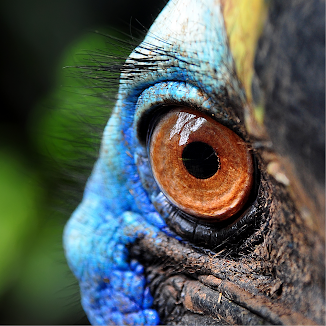
Cassowary, Casuariiformes
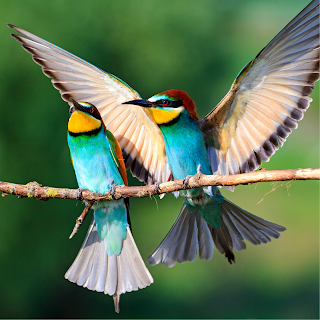
Wherever you are in the world, it is likely that you know your local birds. True, you may call them des Oiseaux, pássaros or uccelli — but you'll know their common names by heart.

You will also likely know their sounds. The tweets, chirps, hoots and caws of the species living in your backyard.

Birds come in all shapes and sizes and their brethren blanket the globe. It is amazing to think that they all sprang from the same lineage given the sheer variety. 

If you picture them, we have such a variety on the planet — parrots, finches, wee hummingbirds, long-legged waterbirds, waddling penguins and showy toucans. 

But whether they are a gull, hawk, cuckoo, hornbill, potoo or albatross, they are all cousins in the warm-blooded vertebrate class Aves. The defining features of the Aves are feathers, toothless beaked jaws, the laying of hard-shelled eggs, a high metabolic rate, a four-chambered heart, and a strong yet lightweight skeleton. The best features, their ability to dance, bounce and sing, are not listed, but it is how I see them in the world.

These modern dinosaurs live worldwide and range in size from the 5 cm (2 in) bee hummingbird to the 2.75 m (9 ft) ostrich. 

There are about ten thousand living species, more than half of which are passerine, or "perching" birds. Birds have wings whose development varies according to species; the only known groups without wings are the extinct moa and elephant birds.

Wings evolved from forelimbs giving birds the ability to fly
Wings, which evolved from forelimbs, gave birds the ability to fly, although further evolution has led to the loss of flight in some birds, including ratites, penguins, and diverse endemic island species. 

The digestive and respiratory systems of birds are also uniquely adapted for flight. Some bird species of aquatic environments, particularly seabirds and some waterbirds, have further evolved for swimming.

Wee Feathered Theropod Dinosaurs

We now know from fossil and biological evidence that birds are a specialized subgroup of theropod dinosaurs, and more specifically, they are members of Maniraptora, a group of theropods that includes dromaeosaurs and oviraptorids, amongst others. As palaeontologists discover more theropods closely related to birds, the previously clear distinction between non-birds and birds has become a bit muddy.

Recent discoveries in the Liaoning Province of northeast China, which include many small theropod feathered dinosaurs — and some excellent arty reproductions — contribute to this ambiguity. 

Still, other fossil specimens found here shed a light on the evolution of Aves. Confuciusornis sanctus, an Early Cretaceous bird from the Yixian and Jiufotang Formations of China is the oldest known bird to have a beak.

Like modern birds, Confuciusornis had a toothless beak, but close relatives of modern birds such as Hesperornis and Ichthyornis were toothed, telling us that the loss of teeth occurred convergently in Confuciusornis and living birds.

The consensus view in contemporary palaeontology is that the flying theropods, or avialans, are the closest relatives of the deinonychosaurs, which include dromaeosaurids and troodontids.

Together, these form a group called Paraves. Some basal members of this group, such as Microraptor, have features that may have enabled them to glide or fly. 

The most basal deinonychosaurs were wee little things. This raises the possibility that the ancestor of all paravians may have been arboreal, have been able to glide, or both. Unlike Archaeopteryx and the non-avialan feathered dinosaurs, who primarily ate meat, tummy contents from recent avialan studies suggest that the first avialans were omnivores. Even more intriguing...

Avialae, which translates to bird wings, are a clade of flying dinosaurs containing the only living dinosaurs, the birds. It is usually defined as all theropod dinosaurs more closely related to modern birds — Aves — than to deinonychosaurs, though alternative definitions are occasionally bantered back and forth.

The Earliest Avialan: Archaeopteryx lithographica

Archaeopteryx, bird-like dinosaur from the Late Jurassic
Archaeopteryx lithographica, from the late Jurassic Period Solnhofen Formation of Germany, is the earliest known avialan that may have had the capability of powered flight. 

However, several older avialans are known from the Late Jurassic Tiaojishan Formation of China, dating to about 160 million years ago.

The Late Jurassic Archaeopteryx is well-known as one of the first transitional fossils to be found, and it provided support for the theory of evolution in the late 19th century. 

Archaeopteryx was the first fossil to clearly display both traditional reptilian characteristics — teeth, clawed fingers, and a long, lizard-like tail—as well as wings with flight feathers similar to those of modern birds. It is not considered a direct ancestor of birds, though it is possibly closely related to the true ancestor.

Unlikely yet true, the closest living relatives of birds are the crocodilians. Birds are descendants of the primitive avialans — whose members include Archaeopteryx — which first appeared about 160 million years ago in China.

DNA evidence tells us that modern birds — Neornithes — evolved in the Middle to Late Cretaceous, and diversified dramatically around the time of the Cretaceous–Paleogene extinction event 66 mya, which killed off the pterosaurs and all non-avian dinosaurs.

In birds, the brain, especially the telencephalon, is remarkably developed, both in relative volume and complexity. Unlike most early‐branching sauropsids, the adults of birds and other archosaurs have a well‐ossified neurocranium. In contrast to most of their reptilian relatives, but similar to what we see in mammals, bird brains fit closely to the endocranial cavity so that major external features are reflected in the endocasts. What you see on the inside is what you see on the outside.

This makes birds an excellent group for palaeoneurological investigations. The first observation of the brain in a long‐extinct bird was made in the first quarter of the 19th century. However, it was not until the 2000s and the application of modern imaging technologies that avian palaeoneurology really took off.

Understanding how the mode of life is reflected in the external morphology of the brains of birds is but one of several future directions in which avian palaeoneurological research may extend.

Although the number of fossil specimens suitable for palaeoneurological explorations is considerably smaller in birds than in mammals and will very likely remain so, the coming years will certainly witness a momentous strengthening of this rapidly growing field of research at the overlap between ornithology, palaeontology, evolutionary biology and the neurosciences.

Reference: Cau, Andrea; Brougham, Tom; Naish, Darren (2015). "The phylogenetic affinities of the bizarre Late Cretaceous Romanian theropod Balaur bondoc (Dinosauria, Maniraptora): Dromaeosaurid or flightless bird?". PeerJ. 3: e1032. doi:10.7717/peerj.1032. PMC 4476167. PMID 26157616.

Reference: Ivanov, M., Hrdlickova, S. & Gregorova, R. (2001) The Complete Encyclopedia of Fossils. Rebo Publishers, Netherlands. p. 312

Saturday, February 26, 2022

LOVE THE WILD: GINKO / LIVING LEGENDS

Living and Fossil Ginko biloba
The gorgeous yellow lobed leaf you see here is from a Maidenhair Tree — Ginko. These lovelies grow slowly but are well worth the effort with their delicate and distinctive lobed leaves of green and yellow. 

Ginko are Living Fossils native to China. We find them in the fossil record as far back as the Permian, 270 million years, rising with cycads, seed ferns and early conifers. They were part of the low, open, shrubby canopy covering our world well before the first flowering plants arrived. 

Ginko grew when Weigeltisaurus jaekeli, the oldest gliding vertebrates first soared our ancient skies and the first wee beetles munched on decaying wood on our forest floors. It is the long history of predation by beetles and their friends that have made Ginko what they are today — hardy, stinky and weaponized. 

These trees are truly a wonder. Consider that they have lasted since the Permian, living through multiple extinction events that wiped out millions of species on the planet. They are one of the few living things to survive a recent human-made extinction event — the atomic bomb blast in Hiroshima, Japan on August 6, 1945 — weathering one of the most horrifying moments in human history. 

170 Ginko Survived the Atomic Bombing of Hiroshima
When the bomb dropped on Hiroshima it created a fireball that bloomed 1,200 feet in diameter, vaporizing most everything in its radius. 

Somehow 170 resident Gingko trees withstood the ferocity and heat of that blast — and they are still standing to this day, 76 years later. Seemingly impossible, and yet quite true. It is because of their hardy nature that we began looking closely at their genetic make-up. 

Plants with seeds are either angiosperms, our showy flowering plants, or gymnosperms, the naked seed plants. Ginkgo are gymnosperms but in their own subclass, Ginkgoidae. The ginkgos we see growing today are the last remaining member of that subclass.

We see Ginko's rise and diversify in the Permian. By the Jurassic, they had spread across Laurasia, the lands that would become modern Asia. It is this lucky foothold in a young Asia that would eventually save their species. 

From the Jurassic to the Pleistocene their numbers slowly dwindled. We have some great Eocene fossils from outcrops at Quilchena, Tranquille and the McAbee Fossil Beds that show them doing quite well in the interior of British Columbia some 50 million years ago, but this pocket of lush growth seems the exception and not the norm. 

By the Pleistocene, just 2.5 million years ago, glaciation threatened to kill off the last of the ginkgo lineages. Their last stand and platform for global distribution once again was rooted in the forests of central China. Every Ginko you see today originated from that small foothold in China. 

While beautiful, Ginkgo are stinky. I was out for a late stroll the night before last to try and catch a glimpse of the Aurora Borealis up at Queen Elizabeth Park. As I walked along one of the darkened pathways, my nose caught a whiff of something smelly. Think vomit mixed with decaying leaf matter. I looked up to confirm the culprit, a gorgeous bright yellow Ginko backlit from above. 

Ginko in Dan & Lena Bowen's Garden
The reason for their terrible smell is quite clever. It is the result of the chemicals they produce to ward off insects, fungi and bacteria. 

Ginko boast a massive genome comprising some 10.6 billion DNA letters within each strand. You and I boast only three billion letters in our human genome.

Written within this vast genetic code are 41,840 genes or templates that the tree’s cells use to make complex protein molecules that build and maintain each tree and give these stinky lovelies an enviable anti-insect arsenal. 

The photo at the top shows the yellow lobed leaves of a Ginko biloba against an Eocene partial lobe from the McAbee Fossil Beds up near Cache Creek, British Columbia, Canada. The bright yellow is this tree's Autumn colour palette. The bright green leaves you see in the bottom photo are the summer colour palette of this same species. The photo was taken this summer in Dan and Lena Bowen's garden during the VIPS Saber-toothed Salmon Barbeque.

Tuesday, November 2, 2021

ANCIENT WONDER OF THE ARBOREAL WORLD

Autumn is a wonderful time to explore Vancouver. It is a riot of yellow, orange and green. The fallen debris you crunch through send up wafts of earthy smells that whisper of decomposition, the journey from leaf to soil.

It is a wonderful time to be out and about. I do love the mountain trails but must confess to loving our cultivated gardens for their colour and variety. 

We have some lovely native plants and trees and more than a few exotics at Vancouver's arboreal trifecta — Van Dusen, Queen E Park and UBC Botanical Gardens. One of those exotics, at least exotic to me, is the lovely conifer you see here is Metasequoia glyptostroboides — the dawn redwood. 

Of this long lineage, this is the sole surviving species in the genus Metasequoia and one of three species of conifers known as redwoods. Metasequoia are the smaller cousins of the mighty Giant Sequoia, the most massive trees on Earth. 

As a group, the redwoods are impressive trees and very long-lived. The President, an ancient Giant Sequoia, Sequoiadendron giganteum, and granddaddy to them all has lived for more than 3,200 years. While this tree is named The President, a worthy name, it doesn't really cover the magnitude of this giant by half.   

This tree was a wee seedling making its way in the soils of the Sierra Nevada mountains of California before we invented writing. It had reached full height before any of the Seven Wonders of the Ancient World, those remarkable constructions of classical antiquity, were even an inkling of our budding human achievements. And it has outlasted them all save the Great Pyramid of Giza, the oldest and last of those seven still standing, though the tree has faired better. Giza still stands but the majority of the limestone façade is long gone.

Aside from their good looks (which can really only get you so far), they are resistant to fire and insects through a combined effort of bark over a foot thick, a high tannin content and minimal resin, a genius of evolutionary design. 

While individual Metasequoia live a long time, as a genus they have lived far longer. 

Like Phoenix from the Ashes, the Cretaceous (K-Pg) extinction event that wiped out the dinosaurs, ammonites and more than seventy-five percent of all species on the planet was their curtain call. The void left by that devastation saw the birth of this genus — and they have not changed all that much in the 65 million years since. Modern Metasequoia glyptostroboides looks pretty much identical to their late Cretaceous brethren.

Dawn Redwood Cones with scales paired in opposite rows
They are remarkably similar to and sometimes mistaken for Sequoia at first glance but are easily distinguishable if you look at their size (an obvious visual in a mature tree) or to their needles and cones in younger specimens. 

Metasequoia has paired needles that attach opposite to each other on the compound stem. Sequoia needles are offset and attached alternately. Think of the pattern as jumping versus walking with your two feet moving forward parallel to one another. 

Metasequoia needles are paired as if you were jumping forward, one print beside the other, while Sequoia needles have the one-in-front-of-the-other pattern of walking.

The seed-bearing cones of Metasequoia have a stalk at their base and the scales are arranged in paired opposite rows which you can see quite well in the visual above. Coast redwood cone scales are arranged in a spiral and lack a stalk at their base.

Although the least tall of the redwoods, it grows to an impressive sixty meters (200 feet) in height. It is sometimes called Shui-sa, or water fir by those who live in the secluded mountainous region of China where it was rediscovered.

Fossil Metasequoia, McAbee Fossil Beds
Metasequoia fossils are known from many areas in the Northern Hemisphere and were one of my first fossil finds as a teenager. 

And folk love naming them. More than twenty fossil species have been named over time —  some even identified as the genus Sequoia in error — but for all their collective efforts to beef up this genus there are just three species: Metasequoia foxii, Metasequoia milleri, and Metasequoia occidentalis.

During the Paleocene and Eocene, extensive forests of Metasequoia thrived as far north as Strathcona Fiord on Ellesmere Island and sites on Axel Heiberg Island in Canada's far north around 80° N latitude.

We find lovely examples of Metasequoia occidentalis in the Eocene outcrops at McAbee near Cache Creek, British Columbia, Canada. I shared a photo here of one of those specimens. Once this piece dries out a bit, I will take a dental pick to it to reveal some of the teaser fossils peeking out.

The McAbee Fossil Beds are known for their incredible abundance, diversity and quality of fossils including lovely plant, insect and fish species that lived in an old lake bed setting. While the Metasequoia and other fossils found here are 52-53 million years old, the genus is much older. It is quite remarkable that both their fossil and extant lineage were discovered in just a few years of one another. 

Metasequoia was first described as a new genus from a fossil specimen found in 1939 and published by Japanese paleobotanist Shigeru Miki in 1941. Remarkably, the living version of this new genus was discovered later that same year. 

Professor Zhan Wang, an official from the Bureau of Forest Research was recovering from malaria at an old school chum's home in central China. His friend told him of a stand of trees discovered in the winter of 1941 by Chinese botanist Toh Gan (干铎). The trees were not far away from where they were staying and Gan's winter visit meant he did not collect any specimen as the trees had lost their leaves. 

The locals called the trees Shui-sa, or water fir. As trees go, they were reportedly quite impressive with some growing as much as sixty feet tall. Wang was excited by the possibility of finding a new species and asked his friend to describe the trees and their needles in detail. Emboldened by the tale, Wang set off through the remote mountains to search for his mysterious trees and found them deep in the heart of  Modaoxi (磨刀溪; now renamed Moudao (谋道), in Lichuan County, in the central China province of Hubei. He found the trees and was able to collect living specimens but initially thought they were from Glyptostrobus pensilis (水松). 

A few years later, Wang showed the trees to botanist Wan-Chun Cheng and learned that these were not the leaves of s Glyptostrobus pensilis (水松 ) but belonged to a new species. 

While the find was exciting, it was overshadowed by China's ongoing conflict with the Japanese that was continuing to escalate. With war at hand, Wang's research funding and science focus needed to be set aside for another two years as he fled the bombing of Beijing. 

When you live in a world without war on home soil it is easy to forget the realities for those who grew up in it. 

Zhan Wang and his family lived to witness the 1931 invasion of Manchuria, then the 1937 clash between Chinese and Japanese troops at the Marco Polo Bridge, just outside Beijing. 

That clash sparked an all-out war that would grow in ferocity to become World War II. 

Within a year, the Chinese military situation was dire. Most of eastern China lay in Japanese hands: Shanghai, Nanjing, Beijing, Wuhan. As the Japanese advanced, they left a devastated population in their path where atrocity after atrocity was the norm. Many outside observers assumed that China could not hold out, and the most likely scenario was a Japanese victory over China.

Yet the Chinese hung on, and after the horrors of Pearl Harbor, the war became genuinely global. The western Allies and China were now united in their war against Japan, a conflict that would finally end on September 2, 1945, after Allied naval forces blockaded Japan and subjected the island nation to intensive bombing, including the utter devastation that was the Enola Gay's atomic payload over Hiroshima. 

With World War II behind them, the Chinese researchers were able to re-focus their energies on the sciences. Sadly, Wang was not able to join them. Instead, two of his colleagues, Wan Chun Cheng and Hu Hsen Hsu, the director of Fan Memorial Institute of Biology would continue the work. Wan-Chun Cheng sent specimens to Hu Hsen Hsu and upon examination realised they were the living version of the trees Miki had published upon in 1941. 

Hu and Cheng published a paper describing a new living species of Metasequoia in May 1948 in the Bulletin of Fan Memorial Institute of Biology.

That same year, Arnold Arboretum of Harvard University sent an expedition to collect seeds and, soon after, seedling trees were distributed to various universities and arboreta worldwide. 

Today, Metasequoia grow around the globe. When I see them, I think of Wang and all he went through. He survived the conflict and went on to teach other bright, young minds about the bountiful flora in China. I think of Wan Chun Cheng collaborating with Hu Hsen Hsu in a time of war and of Hu keeping up to date on scientific research, even published works from colleagues from countries with whom his country was at war. Deep in my belly, I ache for the huge cost to science, research and all the species impacted on the planet from our human conflicts. Each year in April, I plant more Metasequoia to celebrate Earth Day and all that means for every living thing on this big blue orb.  

References: 

  • https://web.stanford.edu/group/humbioresearch/cgi-bin/wordpress/?p=297
  • https://humboldtredwoods.org/redwoods

Sunday, July 18, 2021

HORSESHOE CRABS: WINNING THE SLOW RACE OF TIME

Horseshoe crabs are marine and brackish water arthropods of the order Xiphosura — a slowly evolving, conservative taxa.

Much like (slow) Water Striders (Aquarius remigis), (relatively sluggish) Coelacanth (Latimeria chalumnae) and (the current winner on really slow evolution) Elephant Sharks (Callorhinchus milii), these fellows have a long history in the fossil record with very few anatomical changes. 

But slow change provides loads of great information. It makes our new friend, Yunnanolimulus luoingensis, an especially interesting and excellent reference point for how this group evolved. 

We can examine their genome today and make comparisons all the way back to the Middle Triassic (with this new find) and other specimens from further back in the Ordovician — 445 million years ago. 

These living fossils have survived all five mass extinction events. They are generalists who can live in shallow or deep water and will eat pretty much anything they can find on the seafloor.

The oldest horseshoe crab fossil, Lunataspis aurora, is found in outcrops in Manitoba, Canada. Charmingly, the name means crescent moon shield of the dawn. It was palaeontologist Dave Rudkin and team who chose that romantic name. Finding them as fossils is quite remarkable as their shells are made of protein which does not mineralized like typical fossils.

Even so, the evolution of their exoskeleton is well-documented by fossils, but appendage and soft-tissue preservation are extremely rare. 

A new study analyzes details of the appendage and soft-tissue preservation in Yunnanolimulus luoingensis, a Middle Triassic (ca. 244 million years old) horseshoe crab from Yunnan Province, SW China. The remarkable anatomical preservation includes the chelicerae, five pairs of walking appendages, opisthosomal appendages with book gills, muscles, and fine setae permits comparison with extant horseshoe crabs.

The close anatomical similarity between the Middle Triassic horseshoe crabs and their recent analogues documents anatomical conservatism for over 240 million years, suggesting persistence of lifestyle.

The occurrence of Carcinoscorpius-type claspers on the first and second walking legs in male individuals of Y. luoingensis tells us that simple chelate claspers in males are plesiomorphic for horseshoe crabs, and the bulbous claspers in Tachypleus and Limulus are derived.

As an aside, if you hadn't seen an elephant shark before and were shown a photo, you would likely say, "that's no freaking shark." You would be wrong, of course, but it would be a very clever observation.

Callorhinchus milii look nothing like our Great White friends and they are not true sharks at all. Rather, they are ghost sharks that belong to the subclass Holocephali (chimaera), a group lovingly known as ratfish. They diverged from the shark lineage about 400 million years ago.

If you have a moment, do a search for Callorhinchus milii. The odd-looking fellow with the ironic name, kallos, which means beautiful in Greek, sports black blotches on a pale silver elongate body. And their special feature? It is the fishy equivalent of business in the front, party in the back, with a dangling trunk-like projection at the tip of their snout and well-developed rectal glands near the tail.

As another small point of interest with regards to horseshoe crabs, John McAllister collected several of these while working on his MSc to see if they had microstructures similar to trilobites (they do) and whether their cuticles were likewise calcified. He found no real calcification in their cuticles, in fact, he had a rather frustrating time getting anything measurable to dissolve in acid in his hunt for trace elements. 

Likewise, when looking at oxygen isotopes (16/18) to get a handle on water salinity and temperature, his contacts at the University of Waterloo had tons of fun getting anything at all to analyze. It made for some interesting findings. Sadly, for a number of reasons, he abandoned the work, but you can read his very interesting thesis here: https://dr.library.brocku.ca/handle/10464/1959

Ref: Hu, Shixue & Zhang, Qiyue & Feldmann, Rodney & Benton, Michael & Schweitzer, Carrie & Huang, Jinyuan & Wen, Wen & Zhou, Changyong & Xie, Tao & Lü, Tao & Hong, Shuigen. (2017). Exceptional appendage and soft-tissue preservation in a Middle Triassic horseshoe crab from SW China. Scientific Reports. 7. 10.1038/s41598-017-13319-x.