Showing posts with label evolution. Show all posts

Tuesday, March 5, 2024

LOTUS FLOWER FRUIT

Lotus Flower Fruit, Nelumbo
This beauty is the fruit of the lotus, Nelumbo. This specimen was found by Green River Stone (GRS) in early Eocene outcrops of the Fossil Lake Member of the Green River Formation. 

The awesome possums from GRS are based out of North Logan, Utah, USA and have unearthed some world-class specimens. They've found Nelumbo leaves over the years but this is their first fossil specimen of the fruit.

And what a specimen it is! The spectacularly preserved fruit measures 6-1/2" round. Here you can see both the part and counterpart in fine detail. Doug Miller of Green River Stone sent copies to me this past summer and a copy to the deeply awesome Kirk Johnson, resident palaeontologist over at the Smithsonian Institute, to confirm the identification.

There is another spectacular specimen from Fossil Butte National Monument. They shared photos of a Nelumbo just yesterday. Nelumbo is a genus of aquatic plants in the order Proteales found living in freshwater ponds. You'll recognize them as the emblem of India, Vietnam and many wellness centres.

Nelumbo Fruit, Green River Formation
There is residual disagreement over which family the genus should be placed in. Traditional classification systems recognized Nelumbo as part of the Nymphaeaceae, but traditional taxonomists were likely misled by convergent evolution associated with an evolutionary shift from a terrestrial to an aquatic lifestyle. 

In the older classification systems, it was recognized under the biological order Nymphaeales or Nelumbonales. Nelumbo is currently recognized as the only living genus in Nelumbonaceae, one of several distinctive families in the eudicot order of the Proteales. Its closest living relatives, the (Proteaceae and Platanaceae), are shrubs or trees.

Interestingly, these lovelies can thermoregulate, producing heat. Nelumbo uses the alternative oxidase pathway (AOX) to exchange electrons. Instead of using the typical cytochrome complex pathway most plants use to power mitochondria, they instead use their cyanide-resistant alternative. 

This is perhaps to generate a wee bit more scent in their blooms and attract more pollinators. The use of this thermogenic feature would have also allowed thermo-sensitive pollinators to seek out the plants at night and possibly use the cover of darkness to linger and mate.

So they functioned a bit little like a romantic evening meeting spot for lovers and a wee bit like the scent diffuser in your home. This lovely has an old lineage with fossil species in Eurasia and North America going back to the Cretaceous and represented in the Paleogene and Neogene. Photo Two: Doug Miller of Green River Stone Company

Thursday, February 15, 2024

DARWIN'S TOXODON

Toxodon is an extinct large grazing mammal. The first Toxodon fossils were discovered by Charles Darwin on his visit to South America as part of his voyage on the HMS Beagle. 

Darwin wondered at the fossil's strange appearance as it seemed to share features with both rodents and rhinos. 

“Toxodon is perhaps one of the strangest animals ever discovered,” wrote Darwin. He first encountered the creature in Uruguay on November 26th, 1834. 

“Having heard of some giant’s bones at a neighbouring farm-house…, I rode there accompanied by my host, and purchased for the value of eighteen pence the head of the Toxodon.”

The beast’s skeleton, once fully assembled, was a baffling mish-mash of traits. It was huge like a rhino, but it had the chiselling incisors of a rodent—its name means “arched tooth”—and the high-placed eyes and nostrils of a manatee or some other aquatic mammal. “How wonderfully are the different orders, at present time so well separated, blended together in different points of the structure of the toxodon!”

Although Toxodon is not related to rodents, in 2015, it was discovered to be distantly related to rhinoceros. 

Monday, October 17, 2022

OUR CHARMING TETRAPODS

The irresistable tetrapod Tiktaalik
In the late 1930s, our understanding of the transition of fish to tetrapods — and the eventual jump to modern vertebrates — took an unexpected leap forward. 

The evolutionary a'ha came from a single partial fossil skull found on the shores of a riverbank in Eastern Canada. 

Meet the Stegocephalian, Elpistostege watsoni, an extinct genus of finned tetrapodomorphs that lived during the Late Givetian to Early Frasnian of the Late Devonian — 382 million years ago. 

Elpistostege watsoni — perhaps the sister taxon of all other tetrapods — was first described in 1938 by British palaeontologist and elected Fellow of the Royal Society of London, Thomas Stanley Westoll. Westroll was an interesting fellow whose research interests were wide-ranging. He was a vertebrate palaeontologist and geologist best known for his innovative work on Palaeozoic fishes and their relationships with tetrapods. 

Elpistostege watsoni
As a specialist in early fish, Westoll was the perfect person to ask to interpret that single partial skull roof discovered at the Escuminac Formation in Quebec, Canada. 

His findings and subsequent publication named Elpistostege watsoni and helped us to better understand the evolution of fishes to tetrapods — four-limbed vertebrates — one of the most important transformations in vertebrate evolution. 

Hypotheses of tetrapod origins rely heavily on the anatomy of but a few tetrapod-like fish fossils from the Middle and Late Devonian, 393–359 million years ago. 

These taxa — known as elpistostegalians — include Panderichthys, Elpistostege and Tiktaalik — none of which had yet to reveal the complete skeletal anatomy of the pectoral fin. 

Elpistostege watsoni
None until 2010 that is, when a complete 1.57-metre-long articulated specimen was found and described by Richard Cloutier et al. in 2020. 

The specimen helped us to understand the origin of the vertebrate hand. Stripped from its encasing stone, it revealed a set of paired fins of Elpistostege containing bones homologous to the phalanges (finger bones) of modern tetrapods and is the most basal tetrapodomorph known to possess them. 

Once the phalanges were uncovered, prep work began on the fins. The fins were covered in wee scales and lepidotrichia (fin rays). The work was tiresome, taking more than 2,700 hours of preparation but the results were thrilling. 

Origin of the Vertebrate Hand
We could now clearly see that the skeleton of the pectoral fin has four proximodistal rows of radials — two of which include branched carpals — as well as two distal rows organized as digits and putative digits. 

Despite this skeletal pattern — which represents the most tetrapod-like arrangement of bones found in a pectoral fin to date blurring the line between fish and land vertebrates — the fin retained lepidotrichia (those wee fin rays) distal to the radials. 

This arrangement confirmed an age-old question — showing us for the first time that the origin of phalanges preceded the loss of fin rays, not the other way around.

E. watsoni is very closely related to Tiktaalik roseae found in 2004 in the Canadian Arctic — a tetrapodomorpha species also known as a Choanata. These were advanced forms transitional between fish and the early labyrinthodonts playfully referred to as fishapods — half-fish, half-tetrapod in appearance and limb morphology. 

Up to that point, the relationship of limbed vertebrates (tetrapods) to lobe-finned fish (sarcopterygians) was well known, but the origin of major tetrapod features remained obscure for lack of fossils that document the sequence of evolutionary changes — until Tiktaalik. While Tiktaalik is technically a fish, this fellow is as far from fish-like you can be and still be a card-carrying member of the group. 

Tiktaalik roseae
Complete with scales and gills, this proto-fish lacked the conical head we see in modern fish but had a rather flattened triangular head more like that of a crocodile. 

Tiktaalik had scales on its back and fins with fin webbing but like early land-living animals, it had a distinctive flat head and neck. He was a brawny brute. The shape of his skull and shoulder look part fish and part amphibian.

The watershed moment came as Tiktaalik was prepped. Inside Tiktaalik's fins, we find bones that correspond to the upper arm, forearm and even parts of the wrist — all inside a fin with webbing — remarkable! 

Its fins have thin ray bones for paddling like most fish, but with brawny interior bones that gave Tiktaalik the ability to prop itself up, using his limbs for support. I picture him propped up on one paddle saying, "how you doing?" 

Six years after Tiktaalik was discovered by Neil Shubin and team in the ice-covered tundra of the Canadian Arctic on southern Ellesmere Island, a team working the outcrops at Miguasha on the Gaspé Peninsula discovered the only fully specimen of E. watsoni found to date — greatly increasing our knowledge of this finned tantalizingly transitional tetrapodomorph. 

E. watsoni fossils are rare — this was the fourth specimen collected in over 130 years of hunting. Charmingly, the specimen was right on our doorstop — extracted but a few feet away from the main stairs descending onto the beach of Miguasha National Park. 

L'nu Mi’gmaq First Nations of the Gespe’gewa’gi Region

Miguasha is nestled in the Gaspésie or Gespe’gewa’gi region of Canada — home to the Mi’gmaq First Nations who self-refer as L’nu or Lnu. The word Mi’gmaq or Mi’kmaq means the family or my allies/friends in Mi'kmaw, their native tongue (and soon to be Nova Scotia's provincial first language). They are the people of the sea and the original inhabitants of Atlantic Canada having lived here for more than 10,000 years. 

The L'nu were the first First Nation people to establish contact and trade with European explorers in the 16th and 17th centuries — and perhaps the Norse as early as the turn of the Millenium. Sailing vessels filled with French, British, Scottish, Irish and others arrived one by one to lay claim to the region — settling and fighting over the land. As each group rolled out their machinations of discovery, tensions turned to an all-out war with the British and French going head to head. I'll spare you the sordid details but for everyone caught in the crossfire, it went poorly.

North America Map 1775 (Click to Enlarge)
Cut to 1760, the British tipped the balance with their win at the Battle of the Restigouche, the last naval battle between France and England for possession of the North American continent — Turtle Island. 

The bittersweet British victory sparked the American War of Independence. 

For the next twenty years, the L'nu would witness and become embroiled in yet another war for these lands, their lands — first as bystanders, then as American allies, then intimidated into submission by the British Royal Navy with a show of force by way of a thirty-four gun man-of-war, encouraging L'nu compliance — finally culminating in an end to the hostilities with the 1783 Treaty of Paris. 

The peace accord held no provisions for the L'nu, Métis and First Nations impacted. None of these newcomers was Mi'kmaq — neither friends nor allies.

It was to this area some sixty years later that the newly formed Geological Survey of Canada (GSC) began exploring and mapping the newly formed United Province of Canada. Geologists in the New Brunswick Geology Branch traipsed through the rugged countryside that would become a Canadian province in 1867. 

It was on one of these expeditions that the Miguasha fossil outcrops were discovered. They, too, would transform in time to become Miguasha National Park or Parc de Miguasha, but at first, they were simply the promising sedimentary exposures on the hillside across the water —  a treasure trove of  Late Devonian fauna waiting to be discovered.

In the summer of 1842, Abraham Gesner, New Brunswick’s first Provincial Geologist, crossed the northern part of the region exploring for coal. Well, mostly looking for coal. Gesner also had a keen eye for fossils and his trip to the Gaspé Peninsula came fast on the heels of a jaunt along the rocky beaches of Chignecto Bay at the head of the Bay of Fundy and home to the standing fossil trees of the Joggins Fossil Cliffs. 

Passionate about geology and chemistry, he is perhaps most famous for his invention of the process to distil the combustible hydrocarbon kerosene from coal oil — a subject on which his long walks exploring a budding Canada gave him a great deal of time to consider. We have Gesner to thank for the modern petroleum industry. He filed many patents for clever ways to distil the soft tar-like coal or bitumen still in use today.

He was skilled in a broad range of scientific disciplines — being a geologist, palaeontologist, physician, chemist, anatomist and naturalist — a brass tacks geek to his core. Gesner explored the coal exposures and fossil outcrops across the famed area that witnessed the region become part of England and not France — and no longer L'nu.

Following the Restigouche River in New Brunswick through the Dalhousie region, Gesner navigated through the estuary to reach the southern coast of the Gaspé Peninsula into what would become the southeastern coast of Quebec to get a better look at the cliffs across the water. He was the first geologist to lay eyes on the Escuminac Formation and its fossils.

In his 1843 report to the Geologic Survey, he wrote, “...I found the shore lined with a coarse conglomerate. Farther eastward the rocks are light blue sandstones and shales, containing the remains of vegetables. (...) In these sandstone and shales, I found the remains of fish and a small species of tortoise with fossil foot-marks.”

We now know that this little tortoise was the famous Bothriolepis, an antiarch placoderm fish. It was also the first formal mention of the Miguasha fauna in our scientific literature. Despite the circulation of his report, Gesner’s discovery was all but ignored — the cliffs and their fossil bounty abandoned for decades to come. Geologists like Ells, Foord and Weston, and the research of Whiteaves and Dawson, would eventually follow in Gesner's footsteps.

North America Map 1866 (Click to Enlarge)
Over the past 180 years, this Devonian site has yielded a wonderfully diverse aquatic assemblage from the Age of Fishes — five of the six fossil fish groups associated with the Devonian including exceptionally well-preserved fossil specimens of the lobe-finned fishes. 

This is exciting as it is the lobe-finned fishes — the sarcopterygians — that gave rise to the first four-legged, air-breathing terrestrial vertebrates – the tetrapods. 

Fossil specimens from Miguasha include twenty species of lower vertebrates — anaspids, osteostra-cans, placoderms, acanthodians, actinopterygians and sarcopterygians — plus a limited invertebrate assemblage, along with terrestrial plants, scorpions and millipedes.

Originally interpreted as a freshwater lacustrine environment, recent paleontological, taphonomic, sedimentological and geochemical evidence corroborates a brackish estuarine setting — and definitely not the deep waters of the sea. This is important because the species that gave rise to our land-living animals began life in shallow streams and lakes. It tells us a bit about how our dear Elpistostege watsoni liked to live — preferring to lollygag in cool river waters where seawater mixed with fresh. Not fully freshwater, but a wee bit of salinity to add flavour.  

  • Photos: Elpistostege watsoni (Westoll, 1938 ), Upper Devonian (Frasnian), Escuminac formation, Parc de Miguasha, Baie des Chaleurs, Gaspé, Québec, Canada. John Fam, VanPS
  • Origin of the Vertebrate Hand Illustration, https://www.nature.com/articles/s41586-020-2100-8
  • Tiktaalik Illustration: By Obsidian Soul - Own work, CC BY 4.0, https://commons.wikimedia.org/w/index.php?curid=47401797

References & further reading:

  • From Water to Land: https://www.miguasha.ca/mig-en/the_first_discoveries.php
  • UNESCO Miguasha National Park: https://whc.unesco.org/en/list/686/
  • Office of L'nu Affairs: https://novascotia.ca/abor/aboriginal-people/
  • Cloutier, R., Clement, A.M., Lee, M.S.Y. et al. Elpistostege and the origin of the vertebrate hand. Nature 579, 549–554 (2020). https://doi.org/10.1038/s41586-020-2100-8
  • Daeschler, E. B., Shubin, N. H. & Jenkins, F. A. Jr. A Devonian tetrapod-like fish and the evolution of the tetrapod body plan. Nature 440, 757–763 (2006).
  • Shubin, Neil. Your Inner Fish: A Journey into the 3.5 Billion History of the Human Body.
  • Evidence for European presence in the Americas in AD 1021: https://www.nature.com/articles/s41586-021-03972-8

Thursday, February 17, 2022

AVES: LIVING DINOSAURS

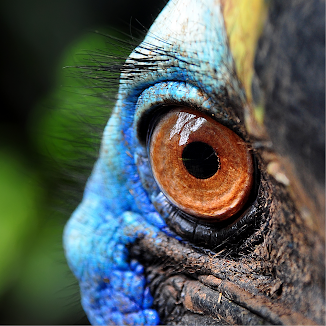
Cassowary, Casuariiformes
Wherever you are in the world, it is likely that you know your local birds. True, you may call them des Oiseaux, pássaros or uccelli — but you'll know their common names by heart.

You will also likely know their sounds. The tweets, chirps, hoots and caws of the species living in your backyard.

Birds come in all shapes and sizes and their brethren blanket the globe. It is amazing to think that they all sprang from the same lineage given the sheer variety. 

If you picture them, we have such a variety on the planet — parrots, finches, wee hummingbirds, long-legged waterbirds, waddling penguins and showy toucans. 

But whether they are a gull, hawk, cuckoo, hornbill, potoo or albatross, they are all cousins in the warm-blooded vertebrate class Aves. The defining features of the Aves are feathers, toothless beaked jaws, the laying of hard-shelled eggs, a high metabolic rate, a four-chambered heart, and a strong yet lightweight skeleton. The best features, their ability to dance, bounce and sing, are not listed, but it is how I see them in the world.

These modern dinosaurs live worldwide and range in size from the 5 cm (2 in) bee hummingbird to the 2.75 m (9 ft) ostrich. 

There are about ten thousand living species, more than half of which are passerine, or "perching" birds. Birds have wings whose development varies according to species; the only known groups without wings are the extinct moa and elephant birds.

Wings evolved from forelimbs giving birds the ability to fly
Wings, which evolved from forelimbs, gave birds the ability to fly, although further evolution has led to the loss of flight in some birds, including ratites, penguins, and diverse endemic island species. 

The digestive and respiratory systems of birds are also uniquely adapted for flight. Some bird species of aquatic environments, particularly seabirds and some waterbirds, have further evolved for swimming.

Wee Feathered Theropod Dinosaurs

We now know from fossil and biological evidence that birds are a specialized subgroup of theropod dinosaurs, and more specifically, they are members of Maniraptora, a group of theropods that includes dromaeosaurs and oviraptorids, amongst others. As palaeontologists discover more theropods closely related to birds, the previously clear distinction between non-birds and birds has become a bit muddy.

Recent discoveries in the Liaoning Province of northeast China, which include many small theropod feathered dinosaurs — and some excellent arty reproductions — contribute to this ambiguity. 

Still, other fossil specimens found here shed a light on the evolution of Aves. Confuciusornis sanctus, an Early Cretaceous bird from the Yixian and Jiufotang Formations of China is the oldest known bird to have a beak.

Like modern birds, Confuciusornis had a toothless beak, but close relatives of modern birds such as Hesperornis and Ichthyornis were toothed, telling us that the loss of teeth occurred convergently in Confuciusornis and living birds.

The consensus view in contemporary palaeontology is that the flying theropods, or avialans, are the closest relatives of the deinonychosaurs, which include dromaeosaurids and troodontids.

Together, these form a group called Paraves. Some basal members of this group, such as Microraptor, have features that may have enabled them to glide or fly. 

The most basal deinonychosaurs were wee little things. This raises the possibility that the ancestor of all paravians may have been arboreal, have been able to glide, or both. Unlike Archaeopteryx and the non-avialan feathered dinosaurs, who primarily ate meat, tummy contents from recent avialan studies suggest that the first avialans were omnivores. Even more intriguing...

Avialae, which translates to bird wings, are a clade of flying dinosaurs containing the only living dinosaurs, the birds. It is usually defined as all theropod dinosaurs more closely related to modern birds — Aves — than to deinonychosaurs, though alternative definitions are occasionally bantered back and forth.

The Earliest Avialan: Archaeopteryx lithographica

Archaeopteryx, bird-like dinosaur from the Late Jurassic
Archaeopteryx lithographica, from the late Jurassic Period Solnhofen Formation of Germany, is the earliest known avialan that may have had the capability of powered flight. 

However, several older avialans are known from the Late Jurassic Tiaojishan Formation of China, dating to about 160 million years ago.

The Late Jurassic Archaeopteryx is well-known as one of the first transitional fossils to be found, and it provided support for the theory of evolution in the late 19th century. 

Archaeopteryx was the first fossil to clearly display both traditional reptilian characteristics — teeth, clawed fingers, and a long, lizard-like tail—as well as wings with flight feathers similar to those of modern birds. It is not considered a direct ancestor of birds, though it is possibly closely related to the true ancestor.

Unlikely yet true, the closest living relatives of birds are the crocodilians. Birds are descendants of the primitive avialans — whose members include Archaeopteryx — which first appeared about 160 million years ago in China.

DNA evidence tells us that modern birds — Neornithes — evolved in the Middle to Late Cretaceous, and diversified dramatically around the time of the Cretaceous–Paleogene extinction event 66 mya, which killed off the pterosaurs and all non-avian dinosaurs.

In birds, the brain, especially the telencephalon, is remarkably developed, both in relative volume and complexity. Unlike most early‐branching sauropsids, the adults of birds and other archosaurs have a well‐ossified neurocranium. In contrast to most of their reptilian relatives, but similar to what we see in mammals, bird brains fit closely to the endocranial cavity so that major external features are reflected in the endocasts. What you see on the inside is what you see on the outside.

This makes birds an excellent group for palaeoneurological investigations. The first observation of the brain in a long‐extinct bird was made in the first quarter of the 19th century. However, it was not until the 2000s and the application of modern imaging technologies that avian palaeoneurology really took off.

Understanding how the mode of life is reflected in the external morphology of the brains of birds is but one of several future directions in which avian palaeoneurological research may extend.

Although the number of fossil specimens suitable for palaeoneurological explorations is considerably smaller in birds than in mammals and will very likely remain so, the coming years will certainly witness a momentous strengthening of this rapidly growing field of research at the overlap between ornithology, palaeontology, evolutionary biology and the neurosciences.

Reference: Cau, Andrea; Brougham, Tom; Naish, Darren (2015). "The phylogenetic affinities of the bizarre Late Cretaceous Romanian theropod Balaur bondoc (Dinosauria, Maniraptora): Dromaeosaurid or flightless bird?". PeerJ. 3: e1032. doi:10.7717/peerj.1032. PMC 4476167. PMID 26157616.

Reference: Ivanov, M., Hrdlickova, S. & Gregorova, R. (2001) The Complete Encyclopedia of Fossils. Rebo Publishers, Netherlands. p. 312

Saturday, August 21, 2021

MUSKOX: CAPRINAE

Look at this soulful fellow. He is a muskox who spends his days slowly meandering through these gorgeous fields eating his fill of nutritious plants on the open tundra. They are social animals, moving together in large herds. 

As a member of the subfamily Caprinae of the family Bovidae, the muskox is more closely related to sheep and goats than to oxen. It has been placed in its own genus, Ovibos — Latin for sheep-ox. It is one of the two largest extant members of Caprinae, along with the similarly sized takin.

While the takin and muskox were once considered possibly closely related, the takin lacks common ovibovine features, such as the muskox's specialized horn morphology, and genetic analysis shows that their lineages actually separated early in caprine evolution. 

Instead, the muskox's closest living relatives appear to be the gorals of the genus Naemorhedus, nowadays common in many countries of central and east Asia. The vague similarity between takin and muskox must therefore be considered an example of convergent evolution.

The modern muskox is the last member of a line of ovibovines that first evolved in temperate regions of Asia and adapted to a cold tundra environment late in its evolutionary history. They lived alongside our lovely Mammoths and would have competed for the same plant resources as those much larger beasts. 

Muskox ancestors with sheep-like high-positioned horns — horn cores being mostly over the plane of the frontal bones, rather than below them as in modern muskoxen — first left the temperate forests for the developing grasslands of Central Asia during the Pliocene, expanding into Siberia and the rest of northern Eurasia. 

Later migration waves of Asian ungulates, including the high-horned muskox, reached Europe and North America during the first half of the Pleistocene. The first well-known muskox, the "shrub-ox" Euceratherium, crossed to North America over an early version of the Bering Land Bridge two million years ago and prospered in the American southwest and Mexico. Euceratherium was larger yet more lightly built than modern muskoxen, resembling a giant sheep with massive horns, and preferred hilly grasslands.

A genus with intermediate horns, Soergelia, inhabited Eurasia in the early Pleistocene, from Spain to Siberia, and crossed to North America during the Irvingtonian (1.8 million years to 240,000 years ago), soon after Euceratherium. Unlike Euceratherium, which survived in America until the Pleistocene-Holocene extinction event, Soergelia was a lowland dweller that disappeared fairly early, displaced by more advanced ungulates, such as the "giant muskox" Praeovibos (literally "before Ovibos"). 

The low-horned Praeovibos was present in Europe and the Mediterranean 1.5 million years ago, colonized Alaska and the Yukon one million years ago and disappeared half a million years ago. Praeovibos was a highly adaptable animal that appears associated with cold tundra (reindeer) and temperate woodland (red deer) faunas alike. 

During the Mindel glaciation 500,000 years ago, Praeovibos was present in the Kolyma river area in eastern Siberia in association with many Ice Age megafauna that would later coexist with Ovibos, in the Kolyma itself and elsewhere, including wild horses, reindeer, woolly mammoth and stag-moose. 

It is debated, however, if Praeovibos was directly ancestral to Ovibos, or both genera descended from a common ancestor since the two occurred together during the middle Pleistocene. Defenders of ancestry from Praeovibos have proposed that Praeovibos evolved into Ovibos in one region during a period of isolation and expanded later, replacing the remaining populations of Praeovibos.

Two more Praeovibos-like genera were named in America in the 19th century, Bootherium and Symbos, which are now identified as the male and female forms of a single, sexually dimorphic species, the "woodland muskox", Bootherium bombifrons. Bootherium inhabited open woodland areas of North America during the Late Pleistocene, from Alaska to Texas and maybe even Mexico, but was most common in the Southern United States, while Ovibos replaced it in the tundra-steppe to the north, immediately south of the Laurentian ice sheet.

Modern Ovibos appeared in Germany almost one million years ago and were common in the region through the Pleistocene. Muskoxen had also reached the British Isles. Both Germany and Britain were just south of the Scandinavian ice sheet and covered in the tundra during cold periods, but Pleistocene muskoxen are also rarely recorded in more benign and wooded areas to the south like France and Green Spain, where they coexisted with temperate ungulates like red deer and aurochs. Likewise, the muskox is known to have survived in Britain during warm interglacial periods.

Today's muskoxen are descended from others believed to have migrated from Siberia to North America between 200,000 and 90,000 years ago, having previously occupied Alaska (at the time united to Siberia and isolated periodically from the rest of North America by the union of the Laurentide and Cordilleran Ice Sheets during colder periods) between 250,000 and 150,000 years ago. 

After migrating south during one of the warmer periods of the Illinoian glaciation, non-Alaskan American muskoxen would be isolated from the rest in the colder periods. The muskox was already present in its current stronghold of Banks Island 34,000 years ago, but the existence of other ice-free areas in the Canadian Arctic Archipelago at the time is disputed.

Along with the bison and the pronghorn, the muskox was one of a few species of Pleistocene megafauna in North America to survive the Pleistocene/Holocene extinction event and live to the present day. The muskox is thought to have been able to survive the last glacial period by finding ice-free areas (refugia) away from prehistoric peoples.

Fossil DNA evidence suggests that muskoxen were not only more geographically widespread during the Pleistocene, but also more genetically diverse. During that time, other populations of muskoxen lived across the Arctic, from the Ural Mountains to Greenland. By contrast, the current genetic makeup of the species is more homogenous. Climate fluctuation may have affected this shift in genetic diversity: research indicates colder periods in Earth's history are correlated with more diversity and warmer periods with more homogeneity.

Monday, July 19, 2021

CHELICERATA: EURYPTERIDS, SPIDERS AND HORSESHOE CRABS

Sanctacaris uncata
This lovely is Sanctacaris uncata — a wonderful example of Chelicerata.

We first see them emerge in our ancient oceans in the Middle Cambrian, some 508 million years ago, as the arthropod Sanctacaris uncata (Briggs & Collins, 1988) known from the Glossopleura Zone, Stephen Formation of Mount Stephen in the Burgess Shale, British Columbia, Canada. 

Sanctacaris is proof positive that chelicerates, although rare, were present in the Middle Cambrian sea. Even at this early stage of evolution, Sanctacaris had the number and type of head appendages found in modified form in the eurypterids and xiphosurids, the major Palaeozoic groups that succeeded it. Even more interesting is that Sanctacaris had all the characteristics of later chelicerates except chelicerae — placing this early arthropod in a primitive sister group of all other chelicerates.

An extinct marine creature half a billion years old may sound otherworldly, but you know some of their more well-known marine brethren — sea spiders, the sexy eurypterids, chasmataspidids and horseshoe crabs — and some of their terrestrial cousins — spiders, scorpions, harvestmen, mites and ticks. 

They are grouped together because, like all arthropods, they have a segmented body and segmented limbs and a thick chitinous cuticle called an exoskeleton. Add those characteristics to a body system with two body segments — a cephalothorax and an abdomen. 

Like all arthropods, chelicerates' bodies and appendages are covered with a tough cuticle made mainly of chitin and chemically hardened proteins. 

Since this cannot stretch, the animals must moult to grow. In other words, they grow new but still soft cuticles, then cast off the old one and wait for the new one to harden. 

Until the new cuticle hardens the animals are defenceless and almost immobilized.  This also helps to explain why you find so many cephalons or moulted head shields — or whatever else our good arthropod friends shed and regrow — in the field and far fewer body fossils of the whole animal.

Some chelicerate are predatory animals that patrol the warm waters near thermal vents. They can be found feeding upon other predators and fish. Although the group were originally solely predatory, they have diversified to use all sorts of feeding strategies: predation, parasitism, herbivory, scavenging and dining on bits of decaying organic matter. 

Although harvestmen can digest solid food it is more akin to a mashed pulp by the time they do. The guts of most modern chelicerates are too narrow to digest solid food, instead, they generally liquidize their chosen meal by grinding it with their chelicerae and pedipalps then flooding it with digestive enzymes. 

To conserve water, air-breathing chelicerates excrete waste as solids that are removed from their blood by Malpighian tubules, structures that also evolved independently in insects — another case of convergent evolution.

The evolutionary origins of chelicerates from the early arthropods have been debated for decades. And although there is considerable agreement about the relationships between most chelicerate sub-groups, the inclusion of the Pycnogonida in this taxon has recently been questioned and the exact position of scorpions is still controversial, though they were long considered the most primitive or basal of the arachnids. 

We still have much to explore to sort out their evolutionary origins and placement within the various lineages but we will get there with time.

Image One: Reconstruction of Sanctacaris uncata, a Cambrian Habeliidan arthropod (stem-Chelicerata: Habeliida). by Junnn11 @ni075; Image Two: Chelicerata by Fossil Huntress

Aria C, Caron JB (December 2017). "Mandibulate convergence in an armoured Cambrian stem chelicerate". BMC Evolutionary Biology. 17 (1): 261. doi:10.1186/s12862-017-1088-7. PMC 5738823. PMID 29262772.

Legg DA (December 2014). "Sanctacaris uncata: the oldest chelicerate (Arthropoda)". Die Naturwissenschaften. 101 (12): 1065–73. doi:10.1007/s00114-014-1245-4. PMID 25296691.

Briggs DE, Collins D (August 1988). "A Middle Cambrian chelicerate from Mount Stephen, British Columbia" (PDF). Palaeontology. 31 (3): 779–798. Archived from the original (PDF) on July 16, 2011. Retrieved April 4, 2010.

Briggs DE, Erwin DH, Collier FJ (1995). Fossils of the Burgess Shale. Washington: Smithsonian Institution Press. ISBN 1-56098-659-X. OCLC 231793738.