Showing posts with label the. Show all posts

Sunday, April 7, 2024

ANCIENT OCTOPUS: KEUPPIA

A sweet as you please example of Keuppia levante (Fuchs, Bracchi & Weis, 2009), an extinct genus of octopus that swam our ancient seas back in the Cretaceous. 

This particular lovely adorns a special place in my heart and my office. His forever home will be within the collections of a local museum but we spend time together—me taking in the remarkable detail and preservation of this specimen and him enjoying a pretty good looking view and regular dustings. Win, win.

I say, he, but we cannot know for sure. 

The dark black and brown area you see here is his ink sac which has been preserved for a remarkable 95 million years.

This cutie is in the family Palaeoctopodidae, and one of the earliest representatives of the order Octopoda — and perhaps my favourite fossil. It was this perfect specimen that inspired the logo for the Fossil Huntress brand.  

These ancient marine beauties are in the class Cephalopoda making them relatives of our modern octopus, squid and cuttlefish.

There are two species of Keuppia, Keuppia hyperbolaris and Keuppia levante, both of which we find as fossils. We find their remains, along with those of the genus Styletoctopus, in Cretaceous-age Hâqel and Hjoula localities in Lebanon. 

For many years, Palaeoctopus newboldi (Woodward, 1896) from the Santonian limestones at Sâhel Aalma, Lebanon, was the only known pre‐Cenozoic coleoid cephalopod believed to have an unambiguous stem‐lineage representative of Octobrachia fioroni

With the unearthing of some extraordinary specimens with exquisite soft‐part preservation in the Lebanon limestones, our understanding of ancient octopus morphology has blossomed. The specimens are from the sub‐lithographical limestones of Hâqel and Hâdjoula, in northwestern Lebanon. The localities are about 15 km apart, 45 km away from Beirut and 15 km away from the coastal city of Jbail. Fuchs et al. put a nice little map in their 2009 paper that I have included and referenced here.

Palaeoctopus newboldi had a spherical mantle sac, a head‐mantle fusion, eight equal arms armed with suckers, an ink sac, a medially isolated shell vestige, and a pair of (sub‐) terminal fins. The bipartite shell vestige suggests that Palaeoctopus belongs to the octopod stem‐lineage, as the sister taxon of the Octopoda, the Cirroctopoda, is characterized by an unpaired clasp‐like shell vestige (Engeser 1988; Haas 2002; Bizikov 2004).

It is from the comparisons of Canadian fauna combined with those from Lebanon and Japan that things really started to get interesting with Octobrachia. Working with fossil specimens from the Campanian of Canada, Fuchs et al. (2007a ) published on the first record of an unpaired, saddle‐shaped shell vestige that might have belonged to a cirroctopod. 

Again from the Santonian–Campanian of Canada and Japan, Tanabe et al. (2008) reported on at least four different jaw morphotypes. Two of them — Paleocirroteuthis haggarti (Tanabe et al., 2008) and Paleocirroteuthis Pacifica  (Tanabe et al ., 2008) — have been interpreted as being of cirroctopod type, one of octopod type, and one of uncertain octobrachiate type. 

Interestingly Fuchs et al. have gone on to describe the second species of Palaeoctopus, the Turonian Palaeoctopus pelagicus from limestones at Vallecillo, Mexico. While more of this fauna will likely be recovered in time, their work is based solely on a medially isolated shell vestige.

Five new specimens have been found in the well-known Upper Cenomanian limestones at Hâqel and Hâdjoula in Lebanon that can be reliably placed within the Octopoda. Fuchs et al. described these exceptionally well‐preserved specimens and discuss their morphology in the context of phylogeny and evolution in their 2008 paper (2009 publishing) in the Palaeontology Association Journal, Volume 51, Issue 1.

The presence of a gladius vestige in this genus shows a transition from squid to octopus in which the inner shell has divided into two parts in early forms to eventually be reduced to lateralized stylets, as can be seen in Styletoctopus.

The adorable fellow you see here with his remarkable soft-bodied preservation and inks sack and beak clearly visible is Keuppia levante. He hails from Late Cretaceous (Upper Cenomanian) limestone deposits near Hâdjoula, northwestern Lebanon. The vampyropod coleoid, Glyphiteuthis abisaadiorum n. sp. is also found at this locality. This specimen is about 5 cm long.

Fuchs, D.; Bracchi, G.; Weis, R. (2009). "New octopods (Cephalopoda: Coleoidea) from the Late Cretaceous (Upper Cenomanian) of Hâkel and Hâdjoula, Lebanon". Palaeontology. 52: 65–81. doi:10.1111/j.1475-4983.2008.00828.x.

Photo one: Fossil Huntress. Figure Two: Topographic map of north‐western Lebanon with the outcrop area in the upper right-hand corner. Fuchs et al, 2009.  

Sunday, April 3, 2022

BEHIND THE SCENES WITH JULIUS CSOTONYI: PALAEOARTIST

Julius Csotonyi BTS on BC'S FOSSIL BOUNTY
Meet Julius Csotonyi — scientist, natural history illustrator, conservationist and biological sciences graduate with a passion for drawing dinosaurs. 

He got hooked on the palaeontology bug early and has been doodling dinosaurs since childhood. 

Over the years, he has expanded his portfolio to include all branches of scientifically inspired artwork — each of them beautifully rendered. 

He has collaborated on projects with several major museums and book publishers from around the globe, including the National Geographic Society and the Royal Tyrrell Museum, working closely with scientists and drawing from his scientific background. 

An MSc graduate of Ecology and Environmental Biology (University of Alberta), and a PhD graduate in microbiology (University of Manitoba), he has published scientific papers on mutualisms in Utah and some very cool and unusual alien-looking bacteria from deep ocean hydrothermal volcanic vents. 

His scientific background fuels his passion to strive to restore as realistically as possible the curiously alien environments that earth has hosted in its deep past. 

His style spans the gamut from pencil and ink line drawings to watercolour, pastel, 2-dimensional digital illustrations and 3-dimensional digital models. His superbly detailed work encompasses dinosaurs and other prehistoric life, sharks and other living animals, as well as space art, fantasy and science fiction themes.

Julius Csotonyi's Hell Creek Raptor
His paleoart career began with work on two dinosaur encyclopedias with UK author Dougal Dixon. 

His largest projects to date have been a panoramic 75-foot-long mural commissioned for the Houston Museum of Natural Science (HMNS), depicting a Late Cretaceous Montana ecosystem along with a mummified Brachylophosaurus —  Dinosaur Mummy CSI: Cretaceous Science Investigation, 2008. 

He has illustrated many life-sized dinosaur murals — some up to 45 metres or 150 feet long — for the Royal Ontario Museum's 2012 exhibit, Ultimate Dinosaurs; Giants from Gondwana. 

Julius illustrated the 25th anniversary exhibit ('Alberta Unearthed') for the Royal Tyrrell Museum of Paleontology (Drumheller, Alberta, 2010) and most of the new Hall of Paleontology at the HMNS. 

Some of his other projects have included the ceratopsian exhibit for the Royal Tyrrell Museum (2007), a mummified Edmontosaurus for Phillip Manning's 'Grave Secrets of Dinosaurs' (National Geographic Books, 2007) and an African Massospondylus nesting site (Royal Ontario Museum, Toronto, 2010). In addition to books and museum projects, 

Csotonyi accepts private commissions of artwork in a wide range of digital and traditional media. His website, http://csotonyi.com, features a growing portfolio of his work, and some of it is also featured on his science blog, 'Evolutionary Routes'. 

He is appearing in BC'S FOSSIL BOUNTY — airing on TELUS Optik TV & the TELUS YouTube Channel beginning Autumn 2022.

Thursday, February 17, 2022

AVES: LIVING DINOSAURS

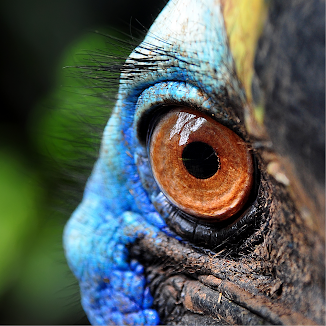
Cassowary, Casuariiformes
Wherever you are in the world, it is likely that you know your local birds. True, you may call them des Oiseaux, pássaros or uccelli — but you'll know their common names by heart.

You will also likely know their sounds. The tweets, chirps, hoots and caws of the species living in your backyard.

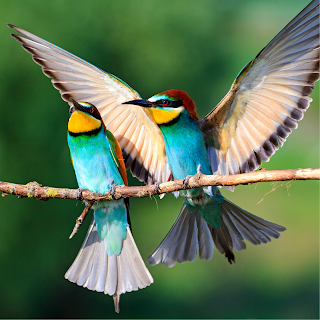
Birds come in all shapes and sizes and their brethren blanket the globe. It is amazing to think that they all sprang from the same lineage given the sheer variety. 

If you picture them, we have such a variety on the planet — parrots, finches, wee hummingbirds, long-legged waterbirds, waddling penguins and showy toucans. 

But whether they are a gull, hawk, cuckoo, hornbill, potoo or albatross, they are all cousins in the warm-blooded vertebrate class Aves. The defining features of the Aves are feathers, toothless beaked jaws, the laying of hard-shelled eggs, a high metabolic rate, a four-chambered heart, and a strong yet lightweight skeleton. The best features, their ability to dance, bounce and sing, are not listed, but it is how I see them in the world.

These modern dinosaurs live worldwide and range in size from the 5 cm (2 in) bee hummingbird to the 2.75 m (9 ft) ostrich. 

There are about ten thousand living species, more than half of which are passerine, or "perching" birds. Birds have wings whose development varies according to species; the only known groups without wings are the extinct moa and elephant birds.

Wings evolved from forelimbs giving birds the ability to fly
Wings, which evolved from forelimbs, gave birds the ability to fly, although further evolution has led to the loss of flight in some birds, including ratites, penguins, and diverse endemic island species. 

The digestive and respiratory systems of birds are also uniquely adapted for flight. Some bird species of aquatic environments, particularly seabirds and some waterbirds, have further evolved for swimming.

Wee Feathered Theropod Dinosaurs

We now know from fossil and biological evidence that birds are a specialized subgroup of theropod dinosaurs, and more specifically, they are members of Maniraptora, a group of theropods that includes dromaeosaurs and oviraptorids, amongst others. As palaeontologists discover more theropods closely related to birds, the previously clear distinction between non-birds and birds has become a bit muddy.

Recent discoveries in the Liaoning Province of northeast China, which include many small theropod feathered dinosaurs — and some excellent arty reproductions — contribute to this ambiguity. 

Still, other fossil specimens found here shed a light on the evolution of Aves. Confuciusornis sanctus, an Early Cretaceous bird from the Yixian and Jiufotang Formations of China is the oldest known bird to have a beak.

Like modern birds, Confuciusornis had a toothless beak, but close relatives of modern birds such as Hesperornis and Ichthyornis were toothed, telling us that the loss of teeth occurred convergently in Confuciusornis and living birds.

The consensus view in contemporary palaeontology is that the flying theropods, or avialans, are the closest relatives of the deinonychosaurs, which include dromaeosaurids and troodontids.

Together, these form a group called Paraves. Some basal members of this group, such as Microraptor, have features that may have enabled them to glide or fly. 

The most basal deinonychosaurs were wee little things. This raises the possibility that the ancestor of all paravians may have been arboreal, have been able to glide, or both. Unlike Archaeopteryx and the non-avialan feathered dinosaurs, who primarily ate meat, tummy contents from recent avialan studies suggest that the first avialans were omnivores. Even more intriguing...

Avialae, which translates to bird wings, are a clade of flying dinosaurs containing the only living dinosaurs, the birds. It is usually defined as all theropod dinosaurs more closely related to modern birds — Aves — than to deinonychosaurs, though alternative definitions are occasionally bantered back and forth.

The Earliest Avialan: Archaeopteryx lithographica

Archaeopteryx, bird-like dinosaur from the Late Jurassic
Archaeopteryx lithographica, from the late Jurassic Period Solnhofen Formation of Germany, is the earliest known avialan that may have had the capability of powered flight. 

However, several older avialans are known from the Late Jurassic Tiaojishan Formation of China, dating to about 160 million years ago.

The Late Jurassic Archaeopteryx is well-known as one of the first transitional fossils to be found, and it provided support for the theory of evolution in the late 19th century. 

Archaeopteryx was the first fossil to clearly display both traditional reptilian characteristics — teeth, clawed fingers, and a long, lizard-like tail—as well as wings with flight feathers similar to those of modern birds. It is not considered a direct ancestor of birds, though it is possibly closely related to the true ancestor.

Unlikely yet true, the closest living relatives of birds are the crocodilians. Birds are descendants of the primitive avialans — whose members include Archaeopteryx — which first appeared about 160 million years ago in China.

DNA evidence tells us that modern birds — Neornithes — evolved in the Middle to Late Cretaceous, and diversified dramatically around the time of the Cretaceous–Paleogene extinction event 66 mya, which killed off the pterosaurs and all non-avian dinosaurs.

In birds, the brain, especially the telencephalon, is remarkably developed, both in relative volume and complexity. Unlike most early‐branching sauropsids, the adults of birds and other archosaurs have a well‐ossified neurocranium. In contrast to most of their reptilian relatives, but similar to what we see in mammals, bird brains fit closely to the endocranial cavity so that major external features are reflected in the endocasts. What you see on the inside is what you see on the outside.

This makes birds an excellent group for palaeoneurological investigations. The first observation of the brain in a long‐extinct bird was made in the first quarter of the 19th century. However, it was not until the 2000s and the application of modern imaging technologies that avian palaeoneurology really took off.

Understanding how the mode of life is reflected in the external morphology of the brains of birds is but one of several future directions in which avian palaeoneurological research may extend.

Although the number of fossil specimens suitable for palaeoneurological explorations is considerably smaller in birds than in mammals and will very likely remain so, the coming years will certainly witness a momentous strengthening of this rapidly growing field of research at the overlap between ornithology, palaeontology, evolutionary biology and the neurosciences.

Reference: Cau, Andrea; Brougham, Tom; Naish, Darren (2015). "The phylogenetic affinities of the bizarre Late Cretaceous Romanian theropod Balaur bondoc (Dinosauria, Maniraptora): Dromaeosaurid or flightless bird?". PeerJ. 3: e1032. doi:10.7717/peerj.1032. PMC 4476167. PMID 26157616.

Reference: Ivanov, M., Hrdlickova, S. & Gregorova, R. (2001) The Complete Encyclopedia of Fossils. Rebo Publishers, Netherlands. p. 312