Showing posts with label fossilhuntress. Show all posts

Monday, May 27, 2024

DINOFLAGELLATES: TEENSY OCEAN STARS

This showy Christmas Cracker is a Dinoflagellate

The showy royal blue Christmas cracker looking fellow you see here is a dinoflagellate. 

Bioluminescent dinoflagellates are a type of plankton — teensy marine organisms that make the seaways shimmer as you swim through them or the tide crashes them against the shore. 

The first modern dinoflagellate was described by Baker in 1753, the first species was formally named by Muller in 1773. 

The first fossil forms were described by Ehrenberg in the 1830s from Cretaceous outcrops. More dinoflagellates have lived, died and gone extinct than there are living today. We know them mainly from fossil dinocysts dating back to the Triassic. They are one of the most primitive of the eukaryotic group with a fossil record that may extend into the Precambrian. They combine primitive characteristics of prokaryotes and advanced eukaryotic features.

The luciferase found in dinoflagellates is related to the green chemical chlorophyll found in plants. Their twinkling lights are brief, each containing about 100 million photons that shine for only a tenth of a second. While each individual flicker is here and gone in the wink of an eye, en masse they are breathtaking. I have spent several wondrous evenings scuba diving amongst these glittering denizens off our shores. What you know about light above the surface does not hold true for the light you see as bioluminescence. Its energy and luminosity come from a chemical reaction. 

In a luminescent reaction, two types of chemicals — luciferin and luciferase — combine together. Together, they produce cold light — light that generates less than 20% thermal radiation or heat. 

The light you see is produced by a compound called Luciferin. It is the shiny, showy bit in this chemical show. Luciferase acts as an enzyme, the substance that acts as a catalyst controlling the rate of chemical reactions, allowing the luciferin to release energy as it is oxidized. 

The colour of the light depends on the chemical structures of the chemicals. There are more than a dozen known chemical luminescent systems, indicating that bioluminescence evolved independently in different groups of organisms.

Coelenterazine is the type of luciferin we find in shrimp, fish and jellyfish. Dinoflagellates and krill share another class of unique luciferins, while ostracods or firefleas and some fish have a completely different luciferin — but all produce lights of various colours to great effect.  

Friday, April 19, 2024

EXPLORING WRANGELLIA: HAIDA GWAII

Misty shores, moss covered forests, a rich cultural history, dappled light, fossils and the smell of salt air—these are my memories of Haida Gwaii.

The archipelago of Haida Gwaii lays at the western edge of the continental shelf due west of the central coast of British Columbia.

They form part of Wrangellia, an exotic tectonostratigraphic terrane that includes Vancouver Island, parts western British Columbia and Alaska.

The Geological Survey of Canada sponsored many expeditions to these remote islands and has produced numerous reference papers on this magnificent terrain, exploring both the geology and palaeontology of the area.

Joseph Whiteaves, the GSC's chief palaeontologist in Ottawa, published a paper in 1876 describing the Jurassic and Cretaceous faunas of Skidegate Inlet, furthering his reputation globally as both a geologist, palaeontologist as well as a critical thinker in the area of science.

The praise was well-earned and foreshadowed his significant contributions to come. Sixteen years later, he wrote up and published his observations on a strange Mount Stephen fossil that resembled a kind of headless shrimp with poorly preserved appendages. 

Because of the unusual pointed shape of the supposed ventral appendages and the position of the spines near the posterior of the animal, Whiteaves named it Anomalocaris canadensis. The genus name "Anomalocaris" means "unlike other shrimp" and the species name "canadensis" refers to the country of origin.

Whiteaves work on the palaeontology of Haida Gwaii provided excellent reference tools, particularly his work on the Cretaceous exposures and fauna that can be found there.

One of our fossil field trips was to the ruggedly beautiful Cretaceous exposures of Lina Island. We had planned this expedition as part of our “trips of a lifetime.” 

Both John Fam, the Vice Chair of the Vancouver Paleontological Society and Dan Bowen, the Chair of both the British Columbia Paleontological Alliance and Vancouver Island Palaeontological Society, can be congratulated for their efforts in researching the area and ably coordinating a warm welcome by the First Nations community and organizing fossil field trips to some of the most amazing fossil localities in the Pacific Northwest.

With great sandstone beach exposures, the fossil-rich (Albian to Cenomanian) Haida formation provided ample specimens, some directly in the bedding planes and many in concretion. Many of the concretions contained multiple specimens of typical Haida Formation fauna, providing a window into this Cretaceous landscape.

It is always interesting to see who was making a living and co-existing in our ancient oceans at the time these fossils were laid down. We found multiple beautifully preserved specimens of the spiny ammonite, Douvelleiceras spiniferum along with Brewericeras hulenense, Cleoniceras perezianum and many cycads in concretion.
Douvelliceras spiniferum, Cretaceous Haida Formation

Missing from this trip log are tales of Rene Savenye, who passed away in the weeks just prior. While he wasn't there in body, he was with us in spirit. I thought of him often on the mist-shrouded days of collecting. 

Many of the folk on who joined me on those outcrops were friends of Rene's and would go on to receive the Rene Savenye Award for their contributions to palaeontology. There is a certain poetry in that. 

The genus Douvilleiceras range from Middle to Late Cretaceous and can be found in Asia, Africa, Europe and North and South America. 

We have beautiful examples in the early to mid-Albian from the archipelago of Haida Gwaii in British Columbia. Joseph F. Whiteaves was the first to recognize the genus from Haida Gwaii when he was looking over the early collections of James Richardson and George Dawson.

My collections from Haida Gwaii will all be lovingly prepped and donated to the Haida Gwaii Museum in Skidegate, British Columbia.

Thursday, April 18, 2024

HUNTING NEUTRINOS AND DARK MATTER

Deep inside the largest and deepest gold mine in North America scientists are looking for dark matter particles and neutrinos instead of precious metals. It may not seem exciting on the surface — but it was far below!

The Homestake Gold Mine in Lawrence County, South Dakota was a going concern from about 1876 to 2001.

The mine produced more than forty million troy ounces of gold in its one hundred and twenty-five-year history, dating back to the beginnings of the Black Hills Gold Rush.

To give its humble beginnings a bit of context, Homestake was started in the days of miners hauling loads of ore via horse and mule and the battles of the Great Sioux War. Folk moved about via horse-drawn buggies and Alexander Graham Bell had just made his first successful telephone call.

Wyatt Earp was working in Dodge City, Kansas — he had yet to get the heck outta Dodge — and Mark Twain was in the throes of publishing The Adventures of Tom Sawyer.  — And our dear Thomas Edison had just opened his first industrial research lab in Menlo Park. The mine is part of the Homestake Formation, an Early Proterozoic layer of iron carbonate and iron silicate that produces auriferous greenschist gold. What does all that geeky goodness mean? If you were a gold miner it would be music to your ears. They ground down that schist to get the glorious good stuff and made a tiny wee sum doing so. But then gold prices levelled off — from 1997 ($287.05) to 2001 ($276.50) — and rumblings from the owners started to grow. They bailed in 2001, ironically just before gold prices started up again.

But back to 2001, that levelling saw the owners look to a new source of revenue in an unusual place. One they had explored way back in the 1960s in a purpose-built underground laboratory that sounds more like something out of a science fiction book. The brainchild of chemist and astrophysicists, John Bahcall and Raymond Davis Jr. from the Brookhaven National Laboratory in Upton, New York, the laboratory was used to observe solar neutrinos, electron neutrinos produced by the Sun as a product of nuclear fusion

Tuesday, April 2, 2024

DOUVILLEICERAS MAMMILLATUM

Some lovely examples of Douvilleiceras mammillatum (Schlotheim, 1813), ammonites from the Lower Cretaceous (Middle-Lower Albian) Douvilliceras inequinodum zone of Ambarimaninga, Mahajanga Province, Madagascar.

The genus Douvilleiceras range from Middle to Late Cretaceous and can be found in Asia, Africa, Europe and North and South America. 

We have beautiful examples in the early to mid-Albian from the archipelago of Haida Gwaii in British Columbia. Joseph F. Whiteaves was the first to recognize the genus from Haida Gwaii when he was looking over the early collections of James Richardson and George Dawson. The beauties you see here measure 6cm to 10cm.

Tuesday, February 13, 2024

JUVENILE HAMITES SUBROTUNDUS

A tremendously delicate juvenile Hamites subrotundus (J. Sowerby 1814) from Upper Albian outcrops in Mallorca, the largest of the three Balearic Islands in the Mediterranean at more than 3,600 square kilometers. 

Mallorca has been home to various inhabitants for thousands of years. Sitting some 200 kilometers off Spain’s southeastern, it is a idyllic setting for exploring the rich human and geologic history of this part of the world.

The island is made up of dolomite and limestone from a huge expanse of time, the Mesozoic and Cenozoic—170 million to 10 million years ago— and bookended by two parallel mountain chains top and bottom on its southern and northern coasts. 

As you walk the mountain passes northwest to northeast, you stroll across Miocene deposits 20 million to 13 million years ago that speak of the time in our Earth's recent past when part of the African continent collided with Europe. 

It is famous for its limestone mountains and Roman and Moorish remains. As you can see here, it is also home to some rather nice fossils including this specimen of Hamites subrotundus.

While H. subrotundus is generally a Middle Albian species, this specimen was found in the lower part of Upper Albian in the Cristatum zone by José Juárez Ruiz. José had to piece this lovely together from seven fragments. His labour of love was worth the effort. The final piece is sheer perfection and a beautiful specimen approximately 2.5 cm long.

Mallorca and the other Balearic Islands are geologically an extension of the Baetic Cordillera mountain chain of western Andalusia that extends to Murcia and Valencia. 

They are made up of sediments deposited in the Tethys Sea during the Mesozoic.

Exploring the islands, you can collect from deposits from the Triassic, Cretaceous, Jurassic, and Neogene periods. 

The limestone outcrops contain lovely examples of foraminifers—mainly the species Globigerina.

We also see lovely examples of Hamites (Hamites) subrotundus in the Euhoplites loricatus zone; Euhoplites meandrinus subzone from the Middle Albian (Lower Gault) of Folkestone, Kent, UK. 

Photo, preparation and in the collection of the deeply awesome José Juárez Ruiz. Wright C. W. 1996. Treatise on Invertebrate Paleontology (Part L Mollusca 4 Revised) Volume 4: Cretaceous Ammonoidea

Saturday, February 10, 2024

YORKSHIRE HISTORY: FOSSILS TEXTILES AND URINE

Yorkshire Coast
You may recall the eight-metre Type Specimen of the ichthyosaur, Temnodontosaurus crassimanus, found in an alum quarry in Yorkshire, northern England.

The Yorkshire Museum was given this important ichthyosaur fossil back in 1857 when alum production was still a necessary staple of the textile industry. Without that industry, many wonderful specimens would likely never have been unearthed.

These quarries are an interesting bit of British history as they helped shape the Yorkshire Coast, created an entirely new industry and gave us more than a fixative for dyes. With them came the discovery of many remarkable fossil specimens and, oddly, local employment in the collection of urine.

In the 16th century, alum was essential in the textile industry as a fixative for dyes. 

By the first half of the 16th century, the clothing of the Low Countries, German states, and Scandinavia had developed in a different direction than that of England, France, and Italy, although all absorbed the sobering and formal influence of Spanish dress after the mid-1520s. Those fashions held true until the Inquisition when religious persecution, politics and fashion underwent a much-needed overhaul to something lighter.

Fashion in Medieval Livonia (1521): Albrecht Dürer
Elaborate slashing was popular, especially in Germany. In the depiction you see here, an artist pokes a bit of fun at Germanic fashion from the time. Bobbin lace arose from passementerie in the mid-16th century in Flanders, the Flemish Dutch-speaking northern portion of Belgium. Black was increasingly worn for the most formal occasions.

This century saw the rise of the ruff, which grew from a mere ruffle at the neckline to immense, slightly silly, cartwheel shapes. They adorned the necklines of the ultra-wealthy and uber-stylish men and women of the age.

At their most extravagant, ruffs required wire supports and were made of fine Italian reticella, a cutwork linen lace. You can imagine the many hours of skill and patience that would have gone into each piece to create the artful framework of these showy lace collars.

16th Century Fashion / Ruff Collars and Finery
In contrast to all that ruff, lace and cutwork linen, folk needed dyed fabrics. And to fix those dyes, they needed Alum. For a time, Italy was the source of that alum.

The Pope held a tidy monopoly on the industry, supplying both alum and the best dyes. He also did a nice trade in colourful and rare pigments for painting. And for a time, all was well with dandy's strutting their finery to the local fops in Britain.

All that changed during the Reformation. Great Britain, heathens as they were, were cut off from their Papal source and needed to fend for themselves.

The good Thomas Challoner took up the charge and set up Britain's first Alum works in Guisborough. Challoner looked to palaeontology for inspiration. Noticing that the fossils found on the Yorkshire coast were very similar to those found in the Alum quarries in Europe, he hatched a plan to set-up an alum industry on home soil. 

As the industry grew, sites along the coast were favoured as access to the shales and subsequent transportation was much easier.

Alum House, Photo: Joyce Dobson and Keith Bowers
Alum was extracted from quarried shales through a large scale and complicated process which took months to complete. 

The process involved extracting then burning huge piles of shale for 9 months, before transferring it to leaching pits to extract an aluminium sulphate liquor. This was sent along channels to the alum works where human urine was added.

At the peak of alum production, the industry required 200 tonnes of urine every year. That's the equivalent of all the potty visits of more than 1,000 people. Yes, strange but true.

The steady demand was hard to keep up with and urine became an imported resource from markets as far away as London and Newcastle upon Tyne in the northeast of England. Wooden buckets were left on street corners for folk to do their business then carted back to the south to complete the alum extraction process. The urine and alum would be mixed into a thick liquid. Once mixed, the aromatic slosh was left to settle and then the alum crystals were removed.

I'm not sure if this is a folktale or plain truth, but as the story goes, one knows when the optimum amount of alum had been extracted as you can pop an egg in the bucket and it floats on its own.

Alum House. Photo: Ann Wedgewood and Keith Bowers
The last Alum works on the Yorkshire Coast closed in 1871. This was due to the invention of manufacturing synthetic alum in 1855, then subsequently the creation of aniline dyes that contained their own fixative.

Many sites along the Yorkshire Coast bear evidence of the alum industry. These include Loftus Alum Quarries where the cliff profile is drastically changed by extraction and huge shale tips remain.

Further South are the Ravenscar Alum Works, which are well-preserved and enable visitors to visualize the processes which took place. The photos you see here are of Alum House at Hummersea. The first shows the ruin of Alum House printed on a postcard from 1906. The second (bottom) image shows the same ruin from on high with Cattersty Point in the background.

The good folk at the National Trust in Swindon are to thank for much of the background shared here. If you'd like to learn more about the Yorkshire area or donate to a very worthy charity, follow their link below.

Reference: https://www.nationaltrust.org.uk/yorkshire-coast/features/how-alum-shaped-the-yorkshire-coast

Friday, February 9, 2024

ANAHOPLITES PLANUS OF FRANCE

A beautiful specimen of the ammonite, Anahoplites planus (Mantell, 1822) from Albian deposits in Villemoyenne Quarry, Courcelles, Aube, north-central France.

Anahoplites (Hyatt, 1900) is a genus of compressed hoplitid ammonites with flat sides, narrow, flat or grooved venters, and flexious ribs or striae arising from weak umbilical tubercles that end in fine dense ventrolateral nodes.

This lovely has attracted some roommates — an oyster, some bryozoans and worm tubes are attached to her shell.

Anahoplites is now included in the subfamily Anahoplitinae and separated from the Hoplitinae where it was placed in the older in the 1957 edition of the Treatise on Invertebrate Paleontology, Part L (Ammonoidea). Genera of the Hoplitinae tend to be more robust, with broader whorls and stronger ribs.

Anahoplites is found in Cretaceous (Middle to the Late Albian) deposits from England, through Europe, all the way to the Transcaspian Oblast region in Russia to the east of the Caspian Sea. The Aube department, named after the local river, is the type locality of the Albian stage (d'ORBIGNY, 1842). 

A. planus from the French Coast
Two formations are recognized in the clay facies (the "Gault" auct.) of the stratotype, the Argiles tégulines de Courcelles (82 m), overlain by the Marnes de Brienne (43 m). The boundary between the two formations is well-defined at the top of an indurated bed and readily identifiable in the field.

This involute (113 mm) specimen shows evidence of cohabitation by some of his marine peers. 

We see two different bryozoa, an oyster and some serpulids making a living and leaving trace fossils on her flat sides. The top specimen was prepared with potase by José Juárez Ruiz of Spain. 

The lovely Anahoplites planus you see here to the lower right was found by Bertus op den Dries on the French coast in Albian deposits near Wissant, P5 and measures in at 8 cm. This on edge view gives you a very good sense of the keel.

Saturday, February 3, 2024

OPHTHALMOPLAX BRASILIANA

Ophthalmoplax brasiliana  / Photo: José F. Ventura‎
Ventral view of the carnivorous portunoid crab Ophthalmoplax brasiliana (Maury, 1930) from the latest Maastrichtian (~66.2 Ma.) deposits near Coahuila, northern Mexico.

This marine species was originally thought to have been found only in the upper Member (Owl Creek Formation) Late/Upper Maastrichtian deposits of Tippah County in Mississippi, USA. 

Sohl and Koch published on the Mississippian finds in the USGS in 1983. Fedorov and Nyborg published on this same species again in 2017. Paleocoordinates: (34.8° N, 88.9° W: 38.3° N, 66.2° W)

Tuesday, January 30, 2024

BUMBLEBEES: FOSSILS AND FIRST NATIONS

This fuzzy yellow and black striped fellow is a bumblebee in the genus Bombus sp., family Apidae. We know him from our gardens where we see them busily lapping up nectar and pollen from flowers with their long hairy tongues.

My Norwegian cousins on my mother's side call them humle. Norway is a wonderful place to be something wild as the wild places have not been disturbed by our hands. 

There are an impressive thirty-five species of bumblebee species that call Norway hjem (home), and one, Bombus consobrinus, boasts the longest tongue that they use to feast solely on Monkshood, genus Aconitum, you may know by the name Wolf's-bane.

In the Kwak̓wala language of the Kwakwaka'wakw, speakers of Kwak'wala, and my family in the Pacific Northwest, bumblebees are known as ha̱mdzalat̕si — though I wonder if this is actually the word for a honey bee, Apis mellifera, as ha̱mdzat̕si is the word for a beehive.

I have a special fondness for all bees and look for them both in the garden and in First Nation art.

Bumblebees' habit of rolling around in flowers gives us a sense that these industrious insects are also playful. In First Nation art they provide levity — comic relief along with their cousins the mosquitoes and wasps — as First Nation dancers wear masks made to mimic their round faces, big round eyes and pointy stingers. A bit of artistic license is taken with their forms as each mask may have up to six stingers. The dancers weave amongst the watchful audience and swoop down to playfully give many of the guests a good, albeit gentle, poke. 

Honey bees actually do a little dance when they get back to the nest with news of an exciting new place to forage — truly they do. Bumblebees do not do a wee bee dance when they come home pleased with themselves from a successful foraging mission, but they do rush around excitedly, running to and fro to share their excitement. They are social learners, so this behaviour can signal those heading out to join them as they return to the perfect patch of wildflowers. 

Bumblebees are quite passive and usually sting in defence of their nest or if they feel threatened. Female bumblebees can sting several times and live on afterwards — unlike honeybees who hold back on their single sting as its barbs hook in once used and their exit shears it off, marking their demise.

They are important buzz pollinators both for our food crops and our wildflowers. Their wings beat at 130 times or more per second, literally shaking the pollen off the flowers with their vibration. 

And they truly are busy bees, spending their days fully focused on their work. Bumblebees collect and carry pollen and nectar back to the nest which may be as much as 25% to 75% of their body weight. 

And they are courteous — as they harvest each flower, they mark them with a particular scent to help others in their group know that the nectar is gone. 

The food they bring back to the nest is eaten to keep the hive healthy but is not used to make honey as each new season's queen bees hibernate over the winter and emerge reinvigorated to seek a new hive each Spring. She will choose a new site, primarily underground depending on the bumblebee species, and then set to work building wax cells for each of her fertilised eggs. 

Bumblebees are quite hardy. The plentiful hairs on their bodies are coated in oils that provide them with natural waterproofing. They can also generate more heat than their smaller, slender honey bee cousins, so they remain productive workers in cooler weather.    

We see the first bumblebees arise in the fossil record 100 million years ago and diversify alongside the earliest flowering plants. Their evolution is an entangled dance with the pollen and varied array of flowers that colour our world. 

We have found many wonderful examples within the fossil record, including a rather famous Eocene fossil bee found by a dear friend and naturalist who has left this Earth, Rene Savenye.

His namesake, H. Savenyei, is a lovely fossil halictine bee from Early Eocene deposits near Quilchena, British Columbia — and the first bee body-fossil known from the Okanagan Highlands — and indeed from Canada. 

It is a fitting homage, as bees symbolize honesty, playfulness and willingness to serve the community in our local First Nation lore and around the world — something Rene did his whole life.

Monday, January 29, 2024

FOSSILS AND FAUNA OF MADAGASGAR

Aioloceras besairiei (Collingnon, 1949)
A stunning example of the internal suturing with calcite infill in this sliced Aioloceras besairiei (Collingnon, 1949) ammonite from the Upper Cretaceous (Lower Albian) Boeny region of Madagascar. 

This island country is 400 kilometres off the coast of East Africa in the Indian Ocean and a wonderful place to explore off the beaten track.

Madagascar has some of the most spectacular of all the fossil specimens I have ever seen. This beauty is no exception. The shell has a generally small umbilicus, arched to acute venter, and typically at some growth stage, falcoid ribs that spring in pairs from umbilical tubercles, usually disappearing on the outer whorls. I had originally had this specimen marked as a Cleoniceras besairiei, except Cleoniceras and Grycia are not present in Madagascar. 

This lovely, seen in cross-section, is now far from home and in the collection of a wonderful friend. It is an especially lovely example of the ammonite, Aioloceras besairiei, making it a beudanticeratinae. Cleoniceras and Grycia are the boreal genera. If you'd like to see (or argue) the rationale on the name, consider reading Riccardi and Medina's riveting work from back in 2002, or Collingnon from 1949.

The beauty you see here measures in at a whopping 22 cm, so quite a handful. This specimen is from the youngest or uppermost subdivision of the Lower Cretaceous. I'd originally thought this locality was older, but dating reveals it to be from the Lower Albian, so approximately 113.0 ± 1.0 Ma to 100.5 ± 0.9 Ma.

Aioloceras are found in the Cretaceous of Madagascar at geo coordinates 16.5° S, 45.9° E: paleo-coordinates 40.5° S, 29.3° E.; and in four localities in South Africa: at locality 36, near the Mzinene River at 28.0° S, 32.3° E: paleo-coordinates 48.6° S, 7.6° E. 

We find them near the Mziene River, at a second locality north of Hluhluwe where the Mzinene Formation overlies the Aptian-Albian Makatini Formation at 28.0° S, 32.3° E: paleo-coordinates 48.6° S, 7.6° E; and at Haughton Z18, on the Pongola River in the Albian III, Tegoceras mosense beds at 27.3° S, 32.2° E: paleo-coordinates 48.0° S, 7.8° E.

If you happen to be trekking to Madagascar, know that it's big. It’s 592,800 square kilometres (or  226,917 square miles), making it the fourth-largest island on the planet — bigger than Spain, Thailand, Sweden and Germany. The island has an interesting geologic history.

Although there has been a geological survey, which was active extending back well into French colonial times, in the non-French-speaking world our geological understanding of the island is still a bit of a mystery. 

Plate tectonic theory had its beginnings in 1915 when Alfred Wegener proposed his theory of "continental drift." 

Wegener proposed that the continents ploughed through the crust of ocean basins, which would explain why the outlines of many coastlines (like South America and Africa) look like they fit together like a puzzle. Half a century after Wegener there is still no agreement as to whether in continental reconstructions Madagascar should be placed adjacent to the Tanzanian coast to the north (e.g., McElhinny and Embleton,1976), against the Mozambique-Natal coast (Flores 1970), or basically left where it is (Kent 1974, Nairn 1978).

There have been few attempts apart from McKinley’s (1960) comparison of the Karoo succession of southwestern Tanzania with that of Madagascar to follow the famous geological precept of “going to sea.” One critical reason is that although there may be a bibliography of several thousand items dealing with Madagascan geology as Besairie (1971) claims, they are items not generally available to the general public. The vital information gained of the geology of the offshore area by post-World War II petroleum exploration has remained largely proprietary. 

Without this data to draw upon, our understanding remains incomplete. I don't actually mind a bit of a mystery here. It is interesting to speculate on how these geologic puzzle pieces fit together and wait for the big reveal. Still, we have good old Besairie from his 1971, Geologie de Madagascar, and a later précis (Besairie, 1973).

We do know that Madagascar was carved off from the African-South American landmass early on. The prehistoric breakup of the supercontinent Gondwana separated the Madagascar–Antarctica–India landmass from the Africa–South America landmass around 135 million years ago. Madagascar later split from India about 88 million years ago, during the Late Cretaceous, so the native plants and animals on the island evolved in relative isolation. 

It is a green and lush island country with more than its fair share of excellent fossil exposures. Along the length of the eastern coast runs a narrow and steep escarpment containing much of the island's remaining tropical lowland forest. If you could look beneath this lush canopy, you'd see rocks of the Precambrian age stretching from the east coast all the way to the centre of the island. The western edge is made up of sedimentary rock from the Carboniferous to the Quaternary.

Red-Tailed Lemurs, Waiwai & Hedgehog
Madagascar is a biodiversity hotspot. Just as Darwin's finches on the Galápagos were isolated, evolving into distinct species (hello, adaptive radiation), over 90% of the wildlife from Madagascar is found nowhere else. 

The island's diverse ecosystems, like so many on this planet, are threatened by Earth's most deadly species, homo sapien sapiens. 

We arrived back in 490 CE and have been chopping down trees and eating our way through the island's tastier populations ever since. Still, they have cuties like this Red-Tailed Lemur. Awe, right?

Today, beautiful outcrops of wonderfully preserved fossil marine fauna hold appeal for me. The material you see from Madagascar is distinctive — and prolific.

Culturally, you'll see a French influence permeating the language, architecture and legal process. There is a part of me that pictures these lovely Lemurs chatting away in French. "Ah, la vache! Regarde le beau fossile, Hérissonne!"

We see the French influence because good 'ol France invaded sleepy Madagascar back in 1883, during the first Franco-Hova War. Malagasy (the local Madagascarian residents) were enlisted as troops, fighting for France in World War I.  During the Second World War, the island was the site of the Battle of Madagascar between the Vichy government and the British. By then, the Malagasy had had quite enough of colonization and after many hiccuping attempts, reached full independence in 1960. Colonization had ended but the tourist barrage had just begun. You can't stop progress.

If you're interested in learning more about this species, check out the Treatise on Invertebrate Paleontology, Part L (Ammonoidea). R.C. Moore (ed). Geological Soc of America and Univ. Kansas Press (1957), p L394. Or head over to look at the 2002 paper from Riccardi and Medina. 2002. Riccardi, A., C. & Medina, F., A. The Beudanticeratinae and Cleoniceratinae (Ammonitina) from the Lower Albian of Patagonia in Revue de Paléobiologie - 21(1) - Muséum d’Histoire Naturelle de la ville de Genève, p 313-314 (=Aioloceras besairiei (COLLIGNON, 1949). You have Bertrand Matrion to thank for the naming correction. Good to have friends in geeky places!

Collignon, M., 1933, Fossiles cenomaniens d’Antmahavelona (Province d’ Analalave, Madagascar), Ann. Geol. Serv. Min. Madagascar, III, 1934 Les Cephalopods du Trias inferieur de Madagascar, Ann. Paleont. XXII 3 and 4, XXII 1.

Besairie, H., 1971, Geologie de Madagascar, 1. Les terrains sedimentaires, Ann. Geol. Madagascar, 35, p. 463.

J. Boast A. and E. M. Nairn collaborated on a chapter in An Outline of the Geology of Madagascar, that is very readable and cites most of the available geologic research papers. It is an excellent place to begin a paleo exploration of the island.

If you happen to parle français, check out: Madagascar ammonites: http://www.ammonites.fr/Geo/Madagascar.htm

Saturday, January 20, 2024

ATURIA: MIOCENE NAUTILOID

Aturia angustata, Lower Miocene, WA
This lovely Lower Miocene nautiloid is Aturia angustata collected on the foreshore near Clallam Bay, Olympic Peninsula, northwestern Washington. 

Aturia is an extinct genus of Paleocene to Miocene nautiloid within Aturiidae, a monotypic family, established by Campman in 1857 for Aturia (Bronn, 1838), and is included in the superfamily Nautilaceae (Kümmel,  1964).

There are seven living nautiloid species in two genera: Nautilus pompilius, N. macromphalus, N. stenomphalus, N. belauensis, and the three new species being described from Samoa, Fiji, and Vanuatu (Ward et al.). We have specimens of fossil nautiloids dating to the Turonian of California, and possibly the Cenomanian of Australia. There has also been a discovery of what might be the only known fossil of Allonautilus (Ward and Saunders, 1997), from the Nanaimo Group of British Columbia, Canada.

Aturia in the Collection of Rick Ross, VIPS
The exquisite shell preservation of many Nanaimo nautilids has opened up a lens into paleotemperatures and accurate Nitrogen isotope analyses. 

Nautilus and all other known Cretaceous through Paleogene nautiloids were shallow water carnivores. We may see their shells as beautiful bits of art and science today, but they were seen in our ancient oceans as small yet mighty predators. Preferring to dine on shrimp, crab, fish and on occasion, a friendly cousin nautiloid to two.

Aturia lived in cooler water in the Cenozoic, preferring it over the warmer waters chosen by their cousins. Aturia, are commonly found as fossils from Eocene and Miocene outcrops. That record ends with their extinction in the late Miocene. This was a fierce little beast with jaws packed with piranha-like teeth. They grew at least twice that of the largest known Nautilus living today. 

Aturia is characterized by a smooth, highly involute, discoidal shell with a complex suture and subdorsal siphuncle. The shell of Aturia is rounded ventrally and flattened laterally; the dorsum is deeply impressed. The suture is one of the most complex within the subclass Nautiloidea. Of all the nautiloids, he may have been able to go deeper than his brethren.

Nautiloids are known for their simple suturing in comparison to their ammonite cousins. This simplicity of design limited their abilities in terms of withstanding the water pressure experienced when several atmospheres below the sea. Nautiloids were not able to compete with their ammonite cousins in this regard. 

Instead of elaborate and complex sutures capable of withstanding the pressures of the deep, nautiloids have simpler sutures that would have them enfold on themselves and crush at depth.  

Aturia angustata; Rick Ross Collection
It has a broad flattened ventral saddle, narrow pointed lateral lobes, broad rounded lateral saddles, broad lobes on the dorso-umbilical slopes, and a broad dorsal saddle divided by a deep, narrow median lobe. 

The siphuncle is moderate in size and located subdorsally in the adapical dorsal flexure of the septum. Based on the feeding and hunting behaviours of living nautiluses, Aturia most likely preyed upon small fish and crustaceans. 

I've found a few of these specimens along the beaches of Clallam Bay and nearby in a local clay quarry. I've also seen calcified and chalcedony — microcrystalline quartz — agatized beauties of this species collected from river sites within the Olympic Peninsula range. In the bottom photos, you can see Aturia from Washington state and one (on the stand on the left) from Oregon, USA. These beauties are in the collections of the deeply awesome Rick Ross, Vancouver Island Palaeontological Society.

References: Ward, P; Haggart, J; Ross, R; Trask, P; Beard, G; Nautilus and Allonautilus in the Nanaimo Group, and in the modern oceans; 12th British Columbia Paleontological Symposium, 2018, Courtenay, abstracts; 2018 p. 10-11

Thursday, January 18, 2024

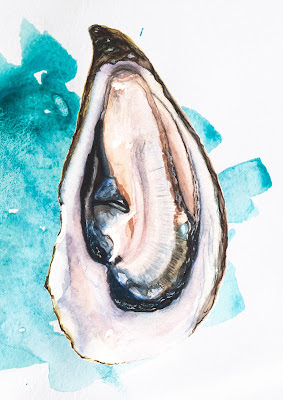
WEST COAST OYSTERS: T'LOXT'LOX

One of the now rare species of oysters in the Pacific Northwest is the Olympia oyster, Ostrea lurida, (Carpenter, 1864).  

While rare today, these are British Columbia’s only native oyster. 

Had you been dining on their brethren in the 1800s or earlier, it would have been this species you were consuming. Middens from Port Hardy to California are built from Ostrea lurida.

These wonderful invertebrates bare their souls with every bite. Have they lived in cold water, deep beneath the sea, protected from the sun's rays and heat? Are they the rough and tumble beach denizens whose thick shells tell us of a life spent withstanding the relentless pounding of the sea? Is the oyster in your mouth thin and slimy having just done the nasty—spurred by the warming waters of Spring? 

Is this oyster a local or was it shipped to your current local and, if asked, would greet you with "Kon'nichiwa?" Not if the beauty on your plate is indeed Ostrea lurida. 

Oyster in Kwak'wala is t̕łox̱t̕łox̱
We have been cultivating, indeed maximizing the influx of invasive species to the cold waters of the Salish Sea for many years. 

But in the wild waters off the coast of British Columbia is the last natural abundant habitat of the tasty Ostrea lurida in the pristine waters of  Nootka Sound. 

The area is home to the Nuu-chah-nulth First Nations who have consumed this species boiled or steamed for thousands of years. Here these ancient oysters not only survive but thrive — building reefs and providing habitat for crab, anemones and small marine animals. 

Oysters are in the family Ostreidae — the true oysters. Their lineage evolved in the Early Triassic — 251 - 247 million years ago. 

In the Kwak̓wala language of the Kwakwaka'wakw, speakers of Kwak'wala, of the Pacific Northwest and my family, an oyster is known as t̕łox̱t̕łox̱. 

I am curious to learn if any of the Nuu-chah-nulth have a different word for an oyster. If you happen to know, I would be grateful to learn.

Wednesday, January 17, 2024

COAHUILACERATOPS MAGNACUERNA

Coahuilaceratops or "Coahuila Horn Face," is a relatively new genus of Ornithischia Ceratopsidae, a  herbivorous ceratopsian dinosaur who lived during the Upper Cretaceous (late Campanian) near the town of Porvenir de Jalpa (about 64 km / 40 miles west of Saltillo) in what is now southern Coahuila (formerly Coahuila de Zaragoza), northern Mexico.

The Sierra Madre Oriental mountain range runs northwest to southwest forming a spine through the centre of the State. East of the range, the arid landscape slopes gently through the desert terrain down to the Rio Grande. It is home to wonderful common, rare and endangered cacti, beautiful (and one of my favourite) raptors, Aquila chrysaetos and the evolutionarily unlikely pronghorn, Antilocapra americana (if a monkey/owl/ antelope had a baby...)

The world was a much wetter warmer place when these big beauties roamed. Picture them ambling through lush vegetation and rearing young next to freshwater rivers, brackish swamps and salty ancient seas. Many of the dinosaur remains from the area bear the marks or remains of fossilized snails and clams. Perhaps predation vs a symbiotic relationship as proximity isn't always intimacy. Coahuilaceratops magnacuerna is known from holotype CPC 276, a partial skeleton of an adult along with bits and pieces of skull, a section of horn, pretty complete lower jaw, a smidge of the upper jaw and part of the frill.

Another specimen, CPS 277, has been touted as a possible juvenile Coahuilaceratops. All the specimens from Coahuilaceratops come from a single Upper Cretaceous (Campanian) locality of the Cerro del Pueblo Formation, northern Mexico.

This particular species of Coahuilaceratops was formally named C. magnacuerna by Mark A. Loewen, Scott D. Sampson, Eric K. Lund, Andrew A. Farke, Martha C. Aguillón-Martínez, C.A. de Leon, R.A. Rodríguez-de la Rosa, Michael A. Getty and David A. Eberth in 2010. Though the name was in circulation informally by those working in the study of ceratopsian dinosaurs as early as 2008.

Though challenged by examining and interpreting mere bits and pieces, the team posed estimates on the overall size of this new rather largish, 6.7 m / 22 ft, chasmosaurine. Coahuilaceratops' horns are also impressively large, estimated at 1.2 m / 4 feet. Rather long for a ceratopsian (consider that a Triceratops distinctive horn generally comes in under 115 cm / 45 inches and interesting in terms of evolutionary design. The holotypes are available for viewing at the Museo del Desierto in Saltillo, Coahuila. Photo credit: José F. Ventura

Monday, January 15, 2024

JELLYFISH: DANCERS OF THE DEEP

This lovely ocean dancer with her long delicate tentacles or lappets and thicker rouched oral arms is a jellyfish. 

Her brethren are playing in the waters of the deep all over the world, from surface waters to our deepest seas — and they are old. They are some of the oldest animals in the fossil record.

Jellyfish and sea jellies are the informal common names given to the medusa-phase or adult phase of certain gelatinous members of the subphylum Medusozoa, a major part of the phylum Cnidaria — more closely related to anemones and corals.

Jellyfish are not fish at all. They evolved millions of years before true fish. The oldest conulariid scyphozoans appeared between 635 and 577 million years ago in the Neoproterozoic of the Lantian Formation, a 150-meter-thick sequence of rocks deposited in southern China. 

Others are found in the youngest Ediacaran rocks of the Tamengo Formation of Brazil, c. 505 mya, through to the Triassic. Cubozoans and hydrozoans appeared in the Cambrian of the Marjum Formation in Utah, USA, c. 540 million years ago.

I have seen all sorts of their brethren growing up on the west coast of Canada. I have seen them in tide pools, washed up on the beach and swam amongst thousands of Moon Jellyfish while scuba diving in the Salish Sea. Their movement in the water is marvellous.  

In the Kwak̓wala language of the Kwakiutl or Kwakwaka'wakw, speakers of Kwak'wala, of the Pacific Northwest, jellyfish are known as ǥaǥisama.

The watercolour ǥaǥisama you see here in dreamy pink and white is but one colour variation. They come in blue, purple, orange, yellow and clear — and are often luminescent. They produce light by the oxidation of a substrate molecule, luciferin, in a reaction catalyzed by a protein, luciferase.

Sunday, January 14, 2024

SAKARA MADAGASGAR: OXFORDIAN OUTCROPS

This big beastie is a superb specimen of the ammonite Lobolytoceras costellatum showing the intricate fractal pattern of its septa. This lovely measures to a whopping 230 mm and hails from Oxfordian outcrops near Sakara, Madagascar. Lovingly prepped by the supremely talented José Juárez Ruiz.

Ammonites were predatory, squidlike creatures that lived inside coil-shaped shells. Like other cephalopods, ammonites had sharp, beak-like jaws inside a ring of squid-like tentacles that extended from their shells. They used these tentacles to snare prey — plankton, vegetation, fish and crustaceans — similar to the way a squid or octopus hunt today.

Catching a fish with your hands is no easy feat, as I'm sure you know. Ammonites did the equivalent, catching prey in their tentacles. They were skilled and successful hunters. They caught their prey while swimming and floating in the water column. Within their shells, they had a number of chambers, called septa, filled with gas or fluid that were interconnected by a wee air tube. By pushing air in or out, they were able to control their buoyancy in the water column.

They lived in the last chamber of their shells, continuously building new shell material as they grew. As each new chamber was added, the squid-like body of the ammonite would move down to occupy the final outside chamber.

They were a group of extinct marine mollusc animals in the subclass Ammonoidea of the class Cephalopoda. These molluscs, commonly referred to as ammonites, are more closely related to living coleoids — octopuses, squid, and cuttlefish) then they are to shelled nautiloids such as the living Nautilus species.

Ammonites have intricate and complex patterns on their shells called sutures. The suture patterns differ across species and tell us what time period the ammonite is from. If they are geometric with numerous undivided lobes and saddles and eight lobes around the conch, we refer to their pattern as goniatitic, a characteristic of Paleozoic ammonites.

Ammonites first appeared about 240 million years ago, though they descended from straight-shelled cephalopods called bacrites that date back to the Devonian, about 415 million years ago, and the last species vanished in the Cretaceous–Paleogene extinction event.

They were prolific breeders that evolved rapidly. If you could cast a fishing line into our ancient seas, it is likely that you would hook an ammonite, not a fish. They were prolific back in the day, living (and sometimes dying) in schools in oceans around the globe. We find ammonite fossils (and plenty of them) in sedimentary rock from all over the world.

In some cases, we find rock beds where we can see evidence of a new species that evolved, lived and died out in such a short time span that we can walk through time, following the course of evolution using ammonites as a window into the past.

For this reason, they make excellent index fossils. An index fossil is a species that allows us to link a particular rock formation, layered in time with a particular species or genus found there. Generally, deeper is older, so we use the sedimentary layers rock to match up to specific geologic time periods, rather the way we use tree-rings to date trees. A handy way to compare fossils and date strata across the globe.

Thursday, January 4, 2024

UNESCOCERATOPS KOPPELHUSAE BY JULIUS CSOTONYI

Unescoceratops koppelhusae, Julius Csotonyi
A very sweet small leptoceratopsid dinosaur, Unescoceratops koppelhusae — a new species in the collections of the Royal Tyrrell Museum of Palaeontology in Drumheller, Alberta.

The colourful and beautifully detailed painting you see here is by the very talented Julius Csotonyi who captured the magnificence of form, texture and palette to bring this small leptoceratopsid dinosaur to life.

The Royal Tyrrell Museum of Palaeontology, named in honour of Joseph Burr Tyrrell, is a palaeontology museum and research facility in Drumheller, Alberta, Canada. 

This jaw is the holotype specimen of this small leptoceratopsid dinosaur. Only a handful of isolated fossils have been found from this species, including a jaw that is the holotype specimen now in collections at the Royal Tyrell. 

The Royal Tyrrell Museum of Palaeontology, named in honour of Joseph Burr Tyrrell, is a palaeontology museum and research facility in Drumheller, Alberta, Canada. 

Unescoceratops koppelhusae, RTMP Collections
The rusty chocolate jaw bone you see here is the puzzle piece that helped all of the research come together and help us to better understand more about the diminutive leptoceratopsid dinosaurs from Alberta. 

The Cleveland Museum of Natural History's Michael Ryan and David Evans of the Royal Ontario Museum in Toronto recently determined that the specimen was a new genus and species. 

Unescoceratops is a genus of leptoceratopsid ceratopsian dinosaurs known from the Late Cretaceous (about 76.5-75 million years ago) of Alberta, Canada. Unescoceratops is thought to have been between one and two meters long and less than 91 kilograms. A plant-eater, its teeth were the roundest of all Leptocertopsids.

Dinosaur Provincial Park, Alberta, Canada
The genus name acknowledges the UNESCO  World Heritage Site, Dinosaur Provincial Park, where the fossil was found. 

In addition to its particularly beautiful scenery, Dinosaur Provincial Park – located at the heart of the province of Alberta's badlands – is unmatched in terms of the number and variety of high-quality specimens.

To date, they represent more than 44 species, 34 genera and 10 families of dinosaurs, dating back 75-77 million years. This provides us with remarkable insight into life millions of years ago.

The park contains exceptional riparian habitat features as well as badlands of outstanding aesthetic value.

The creamy honey, beige and rust coloured hills around the fossil locality are outstanding examples of major geological processes and fluvial erosion patterns in semi-arid steppes — think glorious! 

The scenic badlands stretch along 26 kilometres of high quality and virtually undisturbed riparian habitat, presenting a landscape of stark but exceptional natural beauty.

The species name honours Dr. Eva Koppelhus, who has made significant contributions to vertebrate palaeontology and palynology. 

The genus is named to honour the UNESCO World Heritage Site designation for the locality where the specimen was found and from the Greek “ceratops,” which means 'horned face'. 

Dr Michael Ryan explained that he meant to honour UNESCO's efforts to increase understanding of natural history sites around the world.

© Julius T. Csotonyi An illustration of Unescoceratops koppelhusae, a plant-eating dinosaur from the Late Cretaceous period that lived approximately 75 million years ago shared with his gracious permission. 

ABOUT THE ARTIST

Dr. Julius Csotonyi is a Vancouver-based scientific illustrator and natural history fine artist. He is a featured paleoartist on Season One and Season Two of BC's Fossil Bounty. Julius has a scientific background in ecology (MSc) and microbiology (PhD) which has taken him to study sensitive ecosystems, from sand dunes in the Rocky Mountain parks to hydrothermal vents at the bottom of the Pacific Ocean. 

These experiences have fuelled his strong resolve to work toward preserving our Earth’s biota. Painting biological subjects is one means that he uses to both enhance public awareness of biological diversity and to motivate concern for its welfare.   

He paints murals and panels that have appeared in numerous museums including the Smithsonian’s National Museum of Natural History, press release images for scientific publications, books, stamp sets — including the outstanding 2018 “Sharks of Canada” set for Canada Post — and coins for the Royal Canadian Mint. To view more of Julius Csotonyi's exquisite work visit: https://csotonyi.com/

Wednesday, December 27, 2023

SVALBARD: ICE, SNOW AND ICHTHYOSAURS

Reindeer, Rangifer tarandus 
Ho Ho Ho. Ice, Snow, Reindeer & Ichthyosaurs — Svalbard is just what I imagine my version of Valhalla to be like, without all the mead, murder and mayhem. 

This Norwegian archipelago sits between mainland Norway and the North Pole. 

One of the world’s northernmost inhabited areas, it is known for its rugged, remote terrain of glaciers and frozen tundra sheltering polar bears, reindeer and Arctic fox. 

It is also known for reindeer. The lovelies you see here are all females as the males lose their antlers in the winter. So Rudolf and the rest of Santa's crew who pull his sleigh for him would have all been females as they are pictured with antlers. They are also shown flying across the sky, so the science gets a bit creative.

The Northern Lights or Nordlys are visible during winter, and summer brings the Midnight Sun — sunlight 24 hours a day. Norway or Norge is one of the very few locations where sunset merges into the sunrise, with no darkness in between, creating a soft, captivating twilight in which to view the world. 

The Botneheia Formation is made up of dark grey, laminated shales coarsening upwards to laminated siltstones and sandstones. South of the type area, the formation shows four coarsening-upward units. 

The formation is named for Botneheia Mountain, a mountain in Nordenskiöld Land at Spitsbergen, Svalbard. It has a height of 522 m.a.s.l., and is located south of Sassenfjorden, east of the valley of De Geerdalen. 

Svalbard, Norway
I was asked recently if folk head out in the torrential rain or ice and snow to fossil collect. I would generally say yes for those where the potential prize always outweighs the weather. For Svalbard, it is a resounding yes. 

You have to remove the snow cover — or ice if you are impatient or unlucky — to get to the outcrops here. It is well worth the effort. Beneath the icy cover, you find lovely ammonoids and bivalves. 

Tastier still, ichthyosaur remains are found here. The first Triassic ichthyosaurs from Svalbard were found in the early 20th century. Now there are quite a few Triassic and Jurassic ichthyosaur species from this archipelago.

Two ichthyosaur specimens have been recovered that are of particular interest. They comprise part of the trunk and the caudal vertebral column respectively. 

Some features, such as the very high and narrow caudal and posterior thoracic neural spines, the relatively elongate posterior thoracic vertebrae and the long and slender haemapophyses indicate that they probably represent a member of the family Toretocnemidae. 

Ichthyosaur Bones
Numerous ichthyosaur finds are known from the underlying Lower Triassic Vikinghøgda Formation and the overlying Middle to Upper Triassic Tschermakfjellet Formation, the new specimens help to close a huge gap in the fossil record of the Triassic ichthyosaurs from Svalbard. 

There is a resident research group working on the Triassic ichthyosaur fauna, the Spitsbergen Mesozoic Research Group. 

Lucky for them, they often find the fossil remains fully articulated — the bones having retained their spatial relationship to one another. 

Most of their finds are of the tail sections of primitive Triassic ichthyosaurs. In later ichthyosaurs, the tail vertebrae bend steeply downwards and have more of a fish-like look. 

In these primitive ancestors, the tail looks more eel-like — bending slightly so that the spines on the vertebrae form more of the tail. 

Maisch, Michael W. and Blomeier, Dierk published on these finds back in 2009: Neues Jahrbuch für Geologie und Paläontologie - Abhandlungen Band 254 Heft 3 (2009), p. 379 - 384. Nov 1, 2009.

Svalbard, Norway (Norge)
Svalbard was so remote that there were no Inuit or First Nation settlements. It is certainly possible an earlier people came through these islands, but they did not leave any trace of their travels. 

The first documented travellers to explore Spitsbergen arrived in 1795 as part of a hunting expedition. They included people from the arctic town of Hammerfest in Norway's far north. They were an excellent choice as they were used to barren, inhospitable lands and sailed to discover more. 

We know them as the Coast Sámi — a hearty, rugged people probably best known in history for their chieftain, Ottar. He left Hammerfest in the 9th century to visit then join King Alfred the Great's court in a newly forming England. 

Expeditions to the remote islands of Svalbard continued into the early 1800s and finally, a settlement was eked out of the cold landscape and slowly expanded to the rest of the islands. While today the islands are called Svalbard, I would have named them for the Norwegian word for remote — fjernkontroll.

Aristoptychites euglyphus and Daonella sp.
This marvellous block is filled with Aristoptychites (syn = Arctoptychites) euglyphus (Mojsisovics, 1886) and Daonella sp., oyster-like clams or bivalves from the Middle Triassic, Ladinian, rugged windswept outcrops at the top of the Daonella Shales, Botneheia Formation, Spitzbergen, Edgeøya and Barentsøya, eastern Svalbard, Norway. 

Daonella and Monotis are important species for our understanding of biostratigraphy in the Triassic and are useful as Index fossils. 

Index fossils are fossils used to define and identify geologic periods or faunal stages. To be truly useful, they need to have a short vertical range, wide geographic distribution and rapid evolutionary development.

Daonellids preferred soft, soupy substrates and we tend to find them in massive shell beds. Generally, if you find one, you find a whole bunch cemented together in coquina. The lovely block you see here is in the collections of the deeply awesome John Fam. 

Learning Languages

The Sámi languages (/ˈsɑːmi/ SAH-mee), Sami or Saami, are a group of Uralic languages spoken by the Sámi people in Northern Europe in parts of northern Finland, Norway, Sweden, and extreme northwestern Russia. Of the world's languages, I find them the most difficult for my mind and tongue to wrap around. The Uralic languages will be familiar to you as Hungarian (Magyar nyelv), Finnish and Estonian. 

Since my Sámi is terrible, I will share a few words of Norwegian that may come in handy if you visit Svalbard and have a hankering for their tasty fossils or fossiler. To say, ice, snow, reindeer and ichthyosaurs in Norwegian, you would say: is, snø, reinsdyr og ikthyosaurer. 

To say, "hello, where can I find fossils?" Use, "Hei, hvor kan jeg finne fossiler?" An expression you may not need but circumstances being what they are, "That is a big polar bear," is "Det er en stor isbjørn." A solid follow-up would be, "nice bear, run..." as "Fin bjørn, løp..." Good luck with that.

Wishing you and yours the very best of the holidays however you celebrate. 

Tuesday, February 7, 2023

FOSSILS OF TURTLE ISLAND'S EASTERN SHORES

Hylonomus lyelli, Ancestor of all dinosaurs
The fossil cliffs at Joggins are one of Canada's gems, now a UNESCO World Heritage Site, you can visit to see our ancient world frozen in time. 

Preserved in situ is a snapshot of an entire food chain of a terrestrial Pennsylvanian Coal Age wetland.

The outcrop holds fossil plant life — including impressive standing lycopsid trees that formed the framework of these wetlands — decomposing detritivores in the invertebrates and tetrapods, the predatory carnivores of the day.

The Coal Age trees were fossilized where they stood 300-million-years ago with the remains of the earliest reptiles entombed within. The preservation is quite marvellous with the footprints of creatures who once lived in these wetlands are frozen where they once walked and the dens of amphibians are preserved with remnants of their last meal. 

Nowhere is a record of plant, invertebrate and vertebrate life within now fossilized forests rendered more evocatively. The fossil record at Joggins contains 195+ species of plants, invertebrates and vertebrates. The fossil plant life became the vast coal deposits for which this period of Earth's history is named. 

Recorded in the rock are vertebrate and invertebrate fauna both aquatic and terrestrial. This broad mix of specimens gives us a view into life back in the Pennsylvanian and sets us up to understand their ecological context.
Pennsylvanian Coal Age Ecosystem, 300-Million-Years-Old
The fossil record includes species first defined at Joggins, some of which are found nowhere else on Earth. 

It was here that Sir Charles Lyell, with Sir William Dawson, founder of modern geology, discovered tetrapods — amphibians and reptiles — entombed in the upright fossil trees. 

Later work by Dawson would reveal the first true reptile, Hylonomus lyelli, ancestor of all dinosaurs that would rule the Earth 100 million years later. 

This tiny reptile serves as the reference point where animals finally broke free of the water to live on land. This evolutionary milestone recorded at Joggins remains pivotal to understanding the origins of all vertebrate life on land, including our own species. 

Sir Charles Lyell, author of Principles of Geology, first noted the exceptional natural heritage value of the Joggins Fossil Cliffs, calling them “...the finest example in the world of a natural exposure in a continuous section ten miles long, occurs in the sea cliffs bordering a branch of the Bay of Fundy in Nova Scotia.” Indeed, the world-famous Bay of Fundy with its impressive tides, the highest in the world, and stormy nature exposed much of this outcrop. 

Geological accounts of the celebrated coastal section at Joggins first appear in the published literature in 1828–1829, by Americans C.T. Jackson and F. Alger, and by R. Brown and R. Smith, managers for the General Mining Association in the Sydney and Pictou coal fields. Brown and Smith’s account is the first to document the standing fossil trees.

Joggins Fossil Cliffs Map (Click to Enlarge)
Plan Your Joggins Fossil Cliffs Staycation

Joggins Fossil Cliffs is a Canadian gem — and they welcome visitors. They offer hands-on learning and discovery microscope activities in their Fossil Lab.

You can explore interpretive displays in the Joggins Fossil Centre before heading out to the beach and cliffs with an interpreter.

Their guided tours of the fossil site include an educational component that tells you about the geology, ecology, palaeontology and conservation of this very special site. 

Joggins / Chegoggin / Mi'kmaq L'nu

We know this area as Joggins today. In Mi'kmaw, the language spoken in Mi'kma'ki, the territory of the Mi'kmaq L'nu, the area bears another name, Chegoggin, place of fishing weirs.

Booking Your Class Field Trip

If you are a teacher and would like to book a class field trip, contact the Director of Operations via the contact information listed below. They will walk you through Covid safety and discuss how to make your visit educational, memorable and fun.

Know Before You Go

The Bay of Fundy has the highest tides in the world. Beach walks are scheduled according to the tides and run regardless of the weather. Good low tides but raining, the beach walk goes on. Lovely and sunny but with a high tide, the beach walk must wait. So, you will want to dress for it as they will not be cancelled in the event of rain. Should severe weather be a factor, bookings may need to be rescheduled at the discretion of the Joggins staff.

Any questions about booking your school field trip? Feel free to email:  operations@jogginsfossilcliffs.net or call: 1 (902) 251-2727 EXT 222.

References & further reading:

Joggins Fossil Cliffs: https://jogginsfossilcliffs.net/cliffs/history/

Image: Hylonomus lyelli, Una ricostruzione di ilonomo by Matteo De Stefano/MUSEThis file was uploaded by MUSE - Science Museum of Trento in cooperation with Wikimedia Italia., CC BY-SA 3.0, https://commons.wikimedia.org/w/index.php?curid=48143186

Image: Arthropleura: Par Tim Bertelink — Travail personnel, CC BY-SA 4.0, https://commons.wikimedia.org/w/index.php?curid=48915156

Joggins Map: Joggins Fossil Cliffs: https://jogginsfossilcliffs.net/cliffs/history/