Showing posts with label west. Show all posts

Friday, May 24, 2024

HUMPBACK WHALES: GWA'YAM

Look deep into the knowing eye of this magnificent one. He is a Humpback whale, Megaptera novaeangliae, a species of baleen whale for whom I hold a special place in my heart. 

Baleens are toothless whales who feed on plankton and other wee oceanic tasties that they consume through their baleens, a specialised filter of flexible keratin plates that frame their mouth and fit within their robust jaws.

Baleen whales, the mysticetes, split from toothed whales, the Odontoceti, around 34 million years ago. The split allowed our toothless friends to enjoy a new feeding niche and make their way in a sea with limited food resources. There are fifteen species of baleen whales who inhabit all major oceans. Their number include our humbacks, grays, right whales and the massive blue whale. Their territory runs as a wide band running from the Antarctic ice edge to 81°N latitude. These filter feeders

In the Kwak̓wala language of the Kwakiutl or Kwakwaka'wakw, speakers of Kwak'wala, of the Pacific Northwest, and my cousins on my father's side, whales are known as g̱wa̱'ya̱m. Both the California grey and the Humpback whale live on the coast. Only a small number of individuals in First Nation society had the right to harpoon a whale. This is a practice from many years ago. It was generally only the Chief who was bestowed this great honour. Humpback whales like to feed close to shore and enter the local inlets. Around Vancouver Island and along the coast of British Columbia, this made them a welcome food source as the long days of winter passed into Spring.

Humpback whales are rorquals, members of the Balaenopteridae family that includes the blue, fin, Bryde's, sei and minke whales. The rorquals are believed to have diverged from the other families of the suborder Mysticeti during the middle Miocene. 

While cetaceans were historically thought to have descended from mesonychids—which would place them outside the order Artiodactyla—molecular evidence supports them as a clade of even-toed ungulates—our dear Artiodactyla. 

It is one of the larger rorqual species, with adults ranging in length from 12–16 m (39–52 ft) and weighing around 25–30 metric tons (28–33 short tons). The humpback has a distinctive body shape, with long pectoral fins and a knobbly head. It is known for breaching and other distinctive surface behaviours, making it popular with whale watchers and the lucky few who see them from the decks of our local ferries.

Both male and female humpback whales vocalize, but only males produce the long, loud, complex "song" for which the species is famous. Males produce a complex soulful song lasting 10 to 20 minutes, which they repeat for hours at a time. I imagine Gregorian Monks vocalizing their chant with each individual melody strengthening and complimenting that of their peers. All the males in a group produce the same song, which differed in each season. Its purpose is not clear, though it may help induce estrus in females and bonding amongst the males.

Humpback Whale, Megaptera novaeangliae
Found in oceans and seas around the world, humpback whales typically migrate up to 25,000 km (16,000 mi) each year. 

They feed in polar waters and migrate to tropical or subtropical waters to breed and give birth, fasting and living off their fat reserves. Their diet consists mostly of krill and small fish. 

Humpbacks have a diverse repertoire of feeding methods, including the bubble net technique.

Humpbacks are a friendly species that interact with other cetaceans such as bottlenose dolphins. They are also friendly and oddly protective of humans. You may recall hearing about an incident off the Cook Islands a few years back. Nan Hauser was snorkelling and ran into a tiger shark. Two adult humpback whales rushed to her aid, blocking the shark from reaching her and pushing her back towards the shore. We could learn a thing or two from their kindness. We have not been as good to them as they have been to us.

Like other large whales, the humpback was a tasty and profitable target for the whaling industry. My grandfather and uncle participated in that industry out of Coal Harbour on northern Vancouver Island back in the 1950s. So did many of my First Nation cousins. My cousin John Lyon has told me tales of those days and the slippery stench of that work.

Six whaling stations operated on the coast of British Columbia between 1905 and 1976. Two of these stations were located at Haida Gwaii, one at Rose Harbour and the other at Naden Harbour. Over 9,400 large whales were taken from the waters around Haida Gwaii. The catch included blue whales, fin whales, sei whales, humpback whales, sperm whales and right whales. In the early years of the century, primarily humpback whales were taken. In later years, fin whales and sperm whales dominated the catch. 

Whales were hunted off South Moresby in Haida Gwaii, on the north side of Holberg Inlet in the Quatsino Sound region. It was the norm at the time and a way to make a living, especially for those who had hoped to work in the local coal mine but lost their employment when it shut down. 

While my First Nations relatives hunted whales in small numbers and many years ago, my Norwegian relatives participated in the hunt on a scale that nearly led to their extinction before the process was banned. The Coal Harbour Whaling Station closed in 1967. Once it had closed, my grandfather Einar Eikanger, my mother's father, took to fishing and my uncle Harry lost his life the year before when he slipped and fell over the side of the boat. He was crushed between the hull and a Humpback in rough seas. 

Humpback populations have partially recovered since that time to build their population up to 80,000 animals worldwide—but entanglement in fishing gear, collisions with ships, and noise pollution continue to negatively impact the species. So be kind if you see them. Turn your engine off and see if you can hear their soulful cries echoing in the water.

I did up a video on Humpback Whales over on YouTube so you could see them in all their majesty. Here is the link: https://youtu.be/_Vbta7kQNoM

Sunday, May 19, 2024

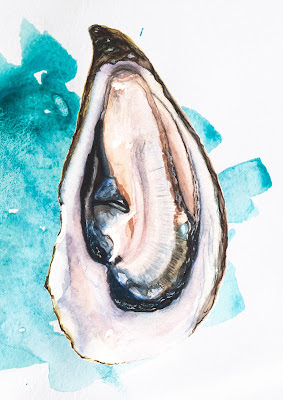
T'LOXT'LOX: WEST COAST OYSTERS

One of the now rare species of oysters in the Pacific Northwest is the Olympia oyster, Ostrea lurida, (Carpenter, 1864).  

While rare today, these are British Columbia’s only native oyster. 

Had you been dining on their brethren in the 1800s or earlier, it would have been this species you were consuming. Middens from Port Hardy to California are built from Ostrea lurida.

These wonderful invertebrates bare their souls with every bite. Have they lived in cold water, deep beneath the sea, protected from the sun's rays and heat? Are they the rough and tumble beach denizens whose thick shells tell us of a life spent withstanding the relentless pounding of the sea? Is the oyster in your mouth thin and slimy having just done the nasty—spurred by the warming waters of Spring? 

Is this oyster a local or was it shipped to your current local and, if asked, would greet you with "Kon'nichiwa?" Not if the beauty on your plate is indeed Ostrea lurida. 

Oyster in Kwak'wala is t̕łox̱t̕łox̱
We have been cultivating, indeed maximizing the influx of invasive species to the cold waters of the Salish Sea for many years. 

But in the wild waters off the coast of British Columbia is the last natural abundant habitat of the tasty Ostrea lurida in the pristine waters of  Nootka Sound. 

The area is home to the Nuu-chah-nulth First Nations who have consumed this species boiled or steamed for thousands of years. Here these ancient oysters not only survive but thrive — building reefs and providing habitat for crab, anemones and small marine animals. 

Oysters are in the family Ostreidae — the true oysters. Their lineage evolved in the Early Triassic — 251 - 247 million years ago. 

In the Kwak̓wala language of the Kwakwaka'wakw, speakers of Kwak'wala, of the Pacific Northwest and my family, an oyster is known as t̕łox̱t̕łox̱. 

I am curious to learn if any of the Nuu-chah-nulth have a different word for an oyster. If you happen to know, I would be grateful to learn.

Monday, May 13, 2024

HIGHLANDS OF ICELAND: AURORA

The Northern Lights over a sea of wildflowers in the marsh near Landmannalaugar, part of the Fjallabak Nature Reserve in the Highlands of Iceland.

Landmannalaugar is at the northern tip of the Laugavegur hiking trail that leads through natural geothermal hot springs and an austere yet poetically beautiful landscape. 

Here, you can see the Northern Lights play through the darkness of a night sky without light pollution and bask in the raw geology of this rugged land.

The Fjallabak region takes its name from the numerous wild and rugged mountains with deeply incised valleys, which are found there. 

The topography of the Torfajokull, a central volcano found within the Fjallabak Nature Reserve, is a direct result of the region being the largest rhyolite area in Iceland and the largest geothermal area (after Grimsvotn in Vatnajokull).

The Torfajokull central volcano is an active volcanic system but is now in a declining fumarolic stage as exemplified by numerous fumaroles and hot springs. The hot pools at Landmannalaugar are but one of many manifestations of geothermal activity in the area, which also tends to alter the minerals in the rocks, causing the beautiful colour variations from red and yellow to blue and green, a good example being Brennisteinsalda. Geologists believe that the Torfajokull central volcano is a caldera, the rim being Haalda, Suðurnamur, Norður-Barmur, Torfajokull, Kaldaklofsfjoll and Ljosartungur.

The bedrock of the Fjallabak Nature Reserve dates back 8-10 million years. At that time the area was on the Reykjanes – Langjokull ridge rift zone. 

The volcano has been most productive during the last 2 million years, that is during the last Ice Age Interglacial rhyolite lava (Brandsgil) and sub-glacial rhyolite (erupted under ice/water, examples being Blahnukur and Brennisteinsalda are characteristic formations in the area. 

To the north of the Torfajokull region, sub-glacial volcanic activity produced the hyaloclastites (Moberg) mountains, such as Lodmundur and Mogilshofdar.

On March 19, 2021, a volcanic eruption started in the Geldingadalir valley at the Fagradalsfjall mountain on the Reykjanes peninsula, South-West Iceland. The volcano is situated approximately 30 km from the country’s capital city, Reykjavík. The eruption is ongoing and the landscape in the valley and its surrounding area is constantly changing as a result.

Prior to the eruptive display earlier this year, volcanic activity over the past 10.000 years has been restricted to a few northeast-southwest fissures, the most recent one, the Veidivotn fissure from 1480, formed Laugahraun (by the hut at Landmannalaugar), Namshraun, Nordurnamshraun, Ljotipollur and other craters which extend 30 km, further to the north Eruptions in the area tend to be explosive and occur every 500 – 800 years, previous known eruptions being around AD 150 and 900.

Sunday, May 12, 2024

KILLER WHALES OF THE PACIFIC: KEET MAX'INUX

One of the iconic animals of the Pacific Northwest are Orca or Killer Whales — Keet in Lingit. Keet-Shaa-gooon' — our ancestors. These playful giants hunt and play in our local waters and all the oceans of the world.

This past week, there has been a pod hunting and playing in the waters near where I am visiting on Vancouver Island. It is wonderful and a wee bit unusual to see them so long in the same hunting grounds. This partially due to their normal hunting behaviour but definitely impacted by the relentless roar of the motors of whale-watching boats.
I do like folk taking an interest in our wildlife. We are more likely to work to protect them if we get to know them. But hunting down a decent meal, courting a mate and rearing your young are challenging with all that racket going on. Imagine trying to cook dinner, play catch with your kid or make love to your partner with half a dozen looky-loos on a hovercraft watching your every move. A bit of attention is flattering but at some point that becomes creepy. 

And yes, whale watchers are meant to keep a healthy distance but that was certainly not the case with the crowd of boats this week. 

Not surprising then that the whales try to dodge the relentless spectators — expending energy on avoiding us instead of on the business of being whales... hunting, eating, rearing, mating. Sometimes we forget ourselves and enjoy wildlife to our own amusement not realizing the impact we have.

Orca are toothed whales who hunt our waters for fish, squid, birds and aquatic mammals. They are the largest member of the Dolphin family who hunt and live amongst their family groups or pods. 

In the Kwak̓wala language of the Kwakiutl or Kwakwaka'wakw, speakers of Kwak'wala, of the Pacific Northwest, orca are known as max̱'inux̱. I do not know the word for orca in the language of the Quw'utsun Cowichan First Nation whose shores they are swimming near this week. 

These large marine mammals are easily distinguished by their black-and-white colouration, large dorsal fin and a sleek, streamlined body. You can often get a peek at their top fin and just enough of their distinctive white eye patch to identify them from a distance.

Up close, their colouring is equally lovely. When I was little, a few resident orcas would come up to our float house and rub up against the side to give themselves a good scritch. We used to offer to help them with this by lowering a deck broom and rubbing it along them. They would roll around playfully and seemed to enjoy it much the same way dogs and cats appreciate a good scratch. 

They show curiosity and intelligence when they look at you and understand that your intention was to help not hurt when the broom was offered. One of them did give the broom a gentle nibble and carried it off a ways but very politely returned it a few minutes later. 

Across their back and along their pectoral flippers is a nice glossy black, The exception is their saddle, a wee patch of greyish white just behind their dorsal fin.  

Whales breathe through their nostril or blowhole that sits in the centre of their forehead. The blow of mist you see in the photo above is this fellow breathing and pushing air out through his blowhole and some seawater along with it. 

Killer whales have a white patch under their heads (lower jaw), under each fluke and a patch along their rear edge as you move towards the tail. While these patches of white make them easier for us to see and identify them, they act as camouflage to those they are hunting in the water.

Their large bodies are streamlined (hydrodynamic), like a submarine, for moving through the water. Whales have flukes or a tail used for swimming. The flukes are moved in an up-and-down motion to accelerate. The dorsal fin acts like the keel of a boat; it keeps the whale from rolling side to side while swimming. They have pectoral flippers just behind the head. These pectoral flippers are used for steering, turning, and stopping.

Live in coastal and offshore waters; resident pods may frequent localized waterways (bays, sounds, etc.) whereas transient pods tend to cover more extensive, varied areas.

An extended clan of orcas, known as the Southern Resident Orca community, socialize and forage in the inland waters of Washington State and British Columbia. The population grows and lessens in relation to the overall Chinook salmon abundance. It may have been this pod that were playing off our shores this week. They are certainly in the neighborhood on and off.

Females (cows) reach reproductive maturity quite late in life at around 14 to 15 years. They give birth every three to ten years, following a 17-month pregnancy. In our local waters, these young join the pod and stay together their whole lives.

At birth, the 2.6 m long calves arrive able to swim and dive and grow quickly feasting on their mothers' milk for the first year of their lives. 

The newborns stay close to mamma, feeding and learning from her and from the close-knit members of the pod. Over the course of their lives, these newborns will grow from 120 to 160 kg up to 3,600 to 7,250 kg.

Like all dolphins, orcas use sophisticated biological sonar, called echolocation. Echolocation enables them to locate and discriminate objects underwater. The vocalizations within whale communities vary and each are different from those in other communities. The calls also bring the pods together over large areas of water when it is not possible for the whales to see each other.

When all goes well, orcas live to be a ripe old age. Some males have been known to live into their 40s and perhaps up to 60+ years old. Females have been known to live up to 90+ years old.


Sunday, March 31, 2024

CANADA'S GREAT BEARS

Look at how this protective mamma bear holds her cub in her arms to give him a bit of a wash. 

Her gentle maternal care is truly touching. This mamma has spent late Autumn to Spring in a cave, having birthed them while still hibernation and staying in the den to feed them on her milk.

Black bear cubs stay with their mamma for the first one to three years of their lives while she protects them and teaches them how to thrive in the wild using their keen sense of smell, hearing, vision and strength. Once they are old enough, they will head off into the forest to live solo until they are ready to mate and start a family of their own. 

Mating is a summer affair with bears socializing shoulder to shoulder with potential mates. Once they have mated, black bears head off on their own again to forage and put on weight for their winter hibernation. If the black bear lives in the northern extent of their range, hibernation lasts longer — they will stay in their dens for seven to eight months longer than their southern counterparts. For those that enjoy the warmer climes in the south, hibernation is shorter. If food is available year-round, the bears do not hibernate at all.

The American black bear, Ursus americanus, is native to North America and found in Canada and the United States. 

They are the most common and widely distributed of the three bear species found in Canada. 

There are roughly 650,000 roaming our forests, swamps and streams — meaning there is a good chance of running into them if you spend any amount of time in the wild. 

Full-grown, these fuzzy monkeys will be able to run 48 kilometres (30 miles)  an hour and smell food up to 32 kilometres (20 miles) away.

With their excellent hearing, black bears usually know you are near well before you realize the same and generally take care to avoid you. Those that come in contact with humans often tend to want to check our garbage and hiking supplies for tasty snacks — hey, a free meal is a free meal.    

In British Columbia, we share our province with nearly half of all black bears and grizzly bears that reside in Canada. The 120,000 - 150,000 black bears who live in the province keep our Conservation Officers busy. They account for 14,000 - 25,000 of the calls the service receives each year. Most of those calls centre around their curiosity for the tasty smells emanating from our garbage. They are omnivores with vegetation making up 80-85% of their diet, but they are flexible around that — berries and seeds, salmon or Doritos — bears eat it all. 

And, as with all wild animals, diet is regional. In Labrador, the local black bear population lives mostly on caribou, rodents and voles. In the Pacific Northwest, salmon and other fish form a large part of the protein in their diet versus the bees, yellow jackets and honey others prefer. The braver of their number have been known to hunt elk, deer and moose calves — and a few showy bears have taken on adults of these large mammals. 

Bears hold a special place within our culture and in First Nation mythology in particular — celebrated in art, dance and song. In the Kwak'wala language of the Kwakiutl First Nations of the Pacific Northwest, the word for black bear is t̕ła'yi — mother is a̱bas and łaxwa̱lap̓a means to love each other. 

Kermode or Spirit Bear, Ursus americanus kermodei
From the photos here you can see that black bears are not always black —  ranging in colour from cinnamon to brown, tan, blonde, red — and even white. 

The Kermode or Spirit Bear, Ursus americanus kermodei, a subspecies of black bear found only in British Columbia — and our official provincial mammal — is a distinctive creamy white. 

They are not albinos, their colouring stems from a recessive mutant gene — meaning that if they receive two copies it triggers a single, nonsynonymous nucleotide substitution that halts all melanin production. Well, not all. They have pigmented eyes and skin but no colour in their fur. The white colour is an advantage when you are hunting salmon by day. Salmon will shy away from their black cousins knowing their intention is to enjoy them as a tasty snack. 

Spirit Bears live in the Great Bear Rainforest on British Columbia's north and central coast alongside the Kitasoo/Xai’xais First Nation who call the Kermode moskgm’ol or white bear.

The Kitasoo/Xai’xais have a legend that tells of Goo-wee, Raven making one in every ten black bears white to remind us of the time glaciers blanketed the land then slowly retreated — their thaw giving rise to the bounty we harvest today.  

Black bears of any colour are a wee bit smaller than their brown bear or grizzly bear cousins, with males weighing in at 45 to 400 kilograms (100 to 900 pounds) and females ranging from 38 to 225 kilograms (85 to 500 pounds). 

Small by relative standards but still very large animals. And they are long-lived or at least can be. Bears in captivity can live up to 30 years but those who dwell in our forests tend to live half as long or less from a mixture of local hazards and humans. 

Reference: Wild Safe BC: https://wildsafebc.com/species/black-bear/


Friday, July 7, 2023

CANADA'S GREAT BEARS

Look at how this protective mamma bear holds her cub in her arms to give him a bit of a wash. 

Her gentle maternal care is truly touching. This mamma has spent late Autumn to Spring in a cave, having birthed them while still hibernation and staying in the den to feed them on her milk.

Black bear cubs stay with their mamma for the first one to three years of their lives while she protects them and teaches them how to thrive in the wild using their keen sense of smell, hearing, vision and strength. Once they are old enough, they will head off into the forest to live solo until they are ready to mate and start a family of their own. 

Mating is a summer affair with bears socializing shoulder to shoulder with potential mates. Once they have mated, black bears head off on their own again to forage and put on weight for their winter hibernation. If the black bear lives in the northern extent of their range, hibernation lasts longer — they will stay in their dens for seven to eight months longer than their southern counterparts. For those that enjoy the warmer climes in the south, hibernation is shorter. If food is available year-round, the bears do not hibernate at all.

The American black bear, Ursus americanus, is native to North America and found in Canada and the United States. 

They are the most common and widely distributed of the three bear species found in Canada. 

There are roughly 650,000 roaming our forests, swamps and streams — meaning there is a good chance of running into them if you spend any amount of time in the wild. 

Full-grown, these fuzzy monkeys will be able to run 48 kilometres (30 miles)  an hour and smell food up to 32 kilometres (20 miles) away.

With their excellent hearing, black bears usually know you are near well before you realize the same and generally take care to avoid you. Those that come in contact with humans often tend to want to check our garbage and hiking supplies for tasty snacks — hey, a free meal is a free meal.    

In British Columbia, we share our province with nearly half of all black bears and grizzly bears that reside in Canada. The 120,000 - 150,000 black bears who live in the province keep our Conservation Officers busy. They account for 14,000 - 25,000 of the calls the service receives each year. Most of those calls centre around their curiosity for the tasty smells emanating from our garbage. They are omnivores with vegetation making up 80-85% of their diet, but they are flexible around that — berries and seeds, salmon or Doritos — bears eat it all. 

And, as with all wild animals, diet is regional. In Labrador, the local black bear population lives mostly on caribou, rodents and voles. In the Pacific Northwest, salmon and other fish form a large part of the protein in their diet versus the bees, yellow jackets and honey others prefer. The braver of their number have been known to hunt elk, deer and moose calves — and a few showy bears have taken on adults of these large mammals. 

Bears hold a special place within our culture and in First Nation mythology in particular — celebrated in art, dance and song. In the Kwak'wala language of the Kwakiutl First Nations of the Pacific Northwest, the word for black bear is t̕ła'yi — mother is a̱bas and łaxwa̱lap̓a means to love each other. 

Kermode or Spirit Bear, Ursus americanus kermodei
From the photos here you can see that black bears are not always black —  ranging in colour from cinnamon to brown, tan, blonde, red — and even white. 

The Kermode or Spirit Bear, Ursus americanus kermodei, a subspecies of black bear found only in British Columbia — and our official provincial mammal — is a distinctive creamy white. 

They are not albinos, their colouring stems from a recessive mutant gene — meaning that if they receive two copies it triggers a single, nonsynonymous nucleotide substitution that halts all melanin production. Well, not all. They have pigmented eyes and skin but no colour in their fur. The white colour is an advantage when you are hunting salmon by day. Salmon will shy away from their black cousins knowing their intention is to enjoy them as a tasty snack. 

Spirit Bears live in the Great Bear Rainforest on British Columbia's north and central coast alongside the Kitasoo/Xai’xais First Nation who call the Kermode moskgm’ol or white bear.

The Kitasoo/Xai’xais have a legend that tells of Goo-wee, Raven making one in every ten black bears white to remind us of the time glaciers blanketed the land then slowly retreated — their thaw giving rise to the bounty we harvest today.  

Black bears of any colour are a wee bit smaller than their brown bear or grizzly bear cousins, with males weighing in at 45 to 400 kilograms (100 to 900 pounds) and females ranging from 38 to 225 kilograms (85 to 500 pounds). 

Small by relative standards but still very large animals. And they are long-lived or at least can be. Bears in captivity can live up to 30 years but those who dwell in our forests tend to live half as long or less from a mixture of local hazards and humans. 

Reference: Wild Safe BC: https://wildsafebc.com/species/black-bear/


Monday, February 13, 2023

ABALONE: GWA'LIT'SA

Abalone is the common name for a group of large marine snails — gastropod molluscs in the genus Haliotis, family Haliotidae.

Haliotis once contained six subgenera but these are now grouped together as alternate representations of Haliotis. 

In the Pacific Northwest, our rocky shores are home to the Northern or Pinto abalone, Haliotis kamtschatkana. 

In the Kwak̓wala language of the Kwakiutl or Kwakwaka'wakw, speakers of Kwak'wala, of the Pacific Northwest, abalone are known as gwa'lit̕sa.

They range from Mexico to Alaska and are the only abalone species found in Washington state, British Columbia and Alaska. Abalone prefer to live amongst the cold waters and high surf of rocky reef habitats. They are easily harvested as their sweet spot is water between 3-18 meters or 10-60 feet deep.  

The shells of abalones have a low, open spiral structure, and are characterized by several open respiratory pores in a row near the shell's outer edge. The thick inner layer of the shell is composed of nacre or mother-of-pearl. Their iridescent nacre is gorgeous and runs from white to blue to green. Both their meat and their shells are highly prized. 

The Northern or Pinto abalone is protected today. Those looking to use the shell for decorative purposes must now look to California or New Zealand. The California abalone is more colourful than its northern cousin and has long been preferred by First Nations artists, particularly for the large earrings favoured by women of rank amongst First Nation clans.

Friday, January 13, 2023

BLUE JAY: KWASK'WAS

If you live in North American, there is a high probability that you have seen or heard the bird song of the Blue jay, Cyanocitta cristata (Linnaeus, 1758).

Blue Jays are in the family Corvidae — along with crows, ravens, rooks, magpies and jackdaws. They belong to a lineage of birds first seen in the Miocene — 25 million years ago. 

These beautifully plumed, blue, black and white birds can be found across southern Canada down to Florida. The distinctive blue you see in their feathers is a trick of the light. Their pigment, melanin, is actually a rather dull brown. The blue you see is caused by scattering light through modified cells on the surface of the feather as wee barbs.

Blue jays like to dine on nuts, seeds, suet, arthropods and some small vertebrates. 

If you are attempting to lure them to your yard with a bird feeder, they prefer those mounted on trays or posts versus hanging feeders. They will eat most anything you have on offer but sunflower seeds and peanuts are their favourites. 

They have a fondness for acorns and have been credited with helping expand the range of oak trees as the ice melted after the last glacial period.  

Their Binomial name, Cyanocitta cristata means, crested, blue chattering bird. I might have amended that to something less flattering, working in a Latin word or two for shrieks and screams — voce et gemitu or ululo et quiritor. While their plumage is a visual feast, their bird chatter leaves something to be desired. 

In the Kwak̓wala language of the Kwakiutl or Kwakwaka'wakw, speakers of Kwak'wala, of the Pacific Northwest and my family, a Blue Jay is known as kwa̱skwa̱s. 

The Kwak’wala word for blue is dzasa and cry is ḵ̕was'id. For interest, the word for bird song in Kwak'wala is t̕sa̱sḵwana. Both their songs and cries are quite helpful if you are an animal living nearby and concerned about predators. 


Thursday, October 6, 2022

WARRIOR CRAB: KU'MIS

Look how epic this little guy is! 

He is a crab — and if you asked him, the fiercest warrior that ever lived. While that may not be strictly true, crabs do have the heart of a warrior and will raise their claws, sometimes only millimetres into the air, to assert dominance over their world. 

Crabs are decapod crustaceans of the Phylum Arthropoda. 

In the Kwak'wala language of the Kwakwa̱ka̱ʼwakw First Nations of the Pacific Northwest, this brave fellow is ḵ̓u'mis — both a tasty snack and familiar to the supernatural deity Tuxw'id, a female warrior spirit. Given their natural armour and clear bravery, it is a fitting role.

They inhabit all the world's oceans, sandy beaches, many of our freshwater lakes and streams. Some few prefer to live in forests.

Crabs build their shells from highly mineralized chitin — and chitin gets around. It is the main structural component of the exoskeletons of many of our crustacean and insect friends. Shrimp, crab, and lobster all use it to build their exoskeletons.

Chitin is a polysaccharide — a large molecule made of many smaller monosaccharides or simple sugars, like glucose. 

It is handy stuff, forming crystalline nanofibrils or whiskers. Chitin is actually the second most abundant polysaccharide after cellulose. It is interesting as we usually think of these molecules in the context of their sugary context but they build many other very useful things in nature — not the least of these are the hard shells or exoskeletons of our crustacean friends.

Crabs in the Fossil Record

The earliest unambiguous crab fossils date from the Early Jurassic, with the oldest being Eocarcinus from the early Pliensbachian of Britain, which likely represents a stem-group lineage, as it lacks several key morphological features that define modern crabs. 

Most Jurassic crabs are only known from dorsal — or top half of the body — carapaces, making it difficult to determine their relationships. Crabs radiated in the Late Jurassic, corresponding with an increase in reef habitats, though they would decline at the end of the Jurassic as the result of the decline of reef ecosystems. Crabs increased in diversity through the Cretaceous and represented the dominant group of decapods by the end.

We find wonderful fossil crab specimens on Vancouver Island. The first I ever collected was at Shelter Point, then again on Hornby Island, down on the Olympic Peninsula and along Vancouver Island's west coast near Nootka Sound. They are, of course, found globally and are one of the most pleasing fossils to find and aggravating to prep of all the specimens you will ever have in your collection. Bless them.


Tuesday, October 4, 2022

BRITISH COLUMBIA'S GREAT BEARS: NAN

Hiking in BC, both grizzly and black bear sightings are common. 

Nearly half the world's population, some 25,000 Grizzly Bears, roam the Canadian wilderness — of those, 14,000 or more call British Columbia home. 

These highly intelligent omnivores spend their days lumbering along our coastlines, mountains and forests. Or tucking away on logs to enjoy a favourite meal as is the case of the two youngsters here.

Both bear families descend from a common ancestor, Ursavus, a bear-dog the size of a raccoon who lived more than 20 million years ago. Seems an implausible lineage given the size of their very large descendants. 

An average Grizzly weighs in around 800 lbs (363 kg), but a recent find in Alaska tops the charts at 1600 lbs (726 kg). 

This mighty beast stood 12' 6' high at the shoulder, 14' to the top of his head and is one of the largest grizzlies ever recorded — a na̱ndzi.

Adult bears tend to live solo except during mating season. Those looking for love congregate from May to July in the hopes of finding a mate. Through adaptation to shifting seasons, the females' reproductive system delays the implantation of fertilized eggs — blastocysts —until November or December to ensure her healthy pups arrive during hibernation. If food resources were slim that year, the newly formed embryo will not catch or attach itself to her uterine wall and she'll try again next year. 

Females reach mating maturity at 4-5 years of age. They give birth to a single or up to four cubs (though usually just two) in January or February. The newborn cubs are cute little nuggets — tiny, hairless, and helpless — weighing in at 2-3 kilograms or 4-8 pounds. They feast on their mother’s nutrient-dense milk for the first two months of life. The cubs stay with their mamma for 18 months or more. Once fully grown, they can run 56 km an hour, are good at climbing trees and swimming and live 20-25 years in the wild. 

A Grizzly bear encounter inspires a humbling appreciation of just how remarkable these massive beasts are. Knowing their level of intelligence, keen memory and that they have a bite force of over 8,000,000 pascals — enough to crush a bowling ball — inspires awe and caution in equal measure. 

They have an indescribable presence. It is likely because of this that these majestic bears show up often in the superb carvings and work of First Nations artists. I have had close encounters with many bears growing up in the Pacific Northwest, meeting them up close and personal in the South Chilcotins and along our many shorelines. 

First Nation Lore and Language

In the Kwak'wala language of the Kwakiutl First Nations of the Pacific Northwest — or Kwakwaka'wakw, speakers of Kwak'wala — a Grizzly bear is known as na̱n. 

The ornamental carved Grizzly bear headdress was worn by the comic Dluwalakha Grizzly Bear Dancers, Once more from Heaven, in the Grizzly Bear Dance or Gaga̱lalał, is known as na̱ng̱a̱mł. 

The Dluwalakha dancers were given supernatural treasures or dloogwi which they passed down from generation to generation. 

In the Hamat'sa Grizzly bear dance, Nanes Bakbakwalanooksiwae, no mask was worn. Instead, the dancers painted their faces red and wore a costume of bearskin or t̓ła̱ntsa̱m and long wooden claws attached to their hands. You can imagine how impressive that sight is lit by the warm flickering flames of firelight during a Winter Dance ceremony.

Smoke of the World / Speaking of the Ancestors — Na̱wiła

Kwaguʼł Winter Dancers — Qagyuhl
Should you encounter a black bear and wish to greet them in Kwak'wala, you would call them t̕ła'yi. Kwakiutl First Nations, Smoke of the World, count Grizzly Bears as an ancestor — along with Seagull, Sun and Thunderbird. 

To tell stories of the ancestors is na̱wiła. Each of these ancestors took off their masks to become human and founded the many groups that are now bound together by language and culture as Kwakwaka’wakw. 

The four First Nations who collectively make up the Kwakiutl are the Kwakiutl (Kwágu7lh), K’umk’utis/Komkiutis, Kwixa/Kweeha (Komoyoi) and Walas Kwakiutl (Lakwilala) First Nations. There is likely blood of the Lawit’sis in there, too, as they inhabited the village site at Tsax̱is/T'sakis, Fort Rupert before the Kwakiutl made it a permanent home. It is where I grew up and I call all who speak Kwak'wala Cousin.

Not all Kwakwaka'wakw dance the Gaga̱lalał, but their ancestors likely attended feasts where the great bear was celebrated. To speak or tell stories of the ancestors is na̱wiła — and Grizzly bear as an ancestor is na̱n helus.

Visiting British Columbia's Great Bears

If you are interested in viewing British Columbia's Great Bears, do check out Indigenous Tourism BC's wonderfully informative website and the culturally-rich wildlife experiences on offer. You will discover travel ideas and resources to plan your next soul-powered adventure. To learn more about British Columbia's Great Bears and the continuing legacy of First Nation stewardship, visit: 

Indigenous Tourism BC: https://www.indigenousbc.com

Great Bear Lodge has been offering tours to view the majestic animals of the Pacific Northwest. They keep both the guests and the animals' comfort and protection in mind. I highly recommend their hospitality and expertise. To see their offerings, visit: www.greatbeartours.com

Image: Group of Winter Dancers--Qagyuhl; Curtis, Edward S., 1868-1952, https://lccn.loc.gov/2003652753. 

Note: The Qagyuhl in the title of this photograph refers to the First Nation group, not the dancers themselves. I think our dear Edward was trying to spell Kwaguʼł and came as close as he was able. In Kwak'wala, the language of the Kwaguʼł or Kwakwakaʼwakw, speakers of Kwak'wala, the Head Winter Dancer is called t̕seḵa̱me' — and to call someone a really good dancer, you would use ya̱'winux̱w. 

Charmingly, when Edward S. Curtis was visiting Tsaxis/T'sakis, he was challenged to a wrestling competition with a Giant Pacific Octopus, Enteroctopus dofleini. George Hunt (1854-1933) had issued the challenge and laughed himself senseless when Edward got himself completely wrapped up in tentacles and was unable to move. Edward was soon untangled and went on to take many more photos of the First Nations of the Pacific Northwest. Things did not go as well for the octopus or ta̱ḵ̕wa. It was later served for dinner or dzaḵwax̱stala, as it seemed calamari was destined for that night's menu.  


Tuesday, August 2, 2022

SACRED CEPHALOPODS: TAK'WA

This lovely with her colourful body is an octopus. Like ninety-seven percent of the world's animals, she lacks a backbone. 

To support their bodies, these spineless animals — invertebrates — have skeletons made of protein fibres. 

This flexibility can be a real advantage when slipping into nooks and crannies for protection and making a home in seemingly impossible places.

On the east side of Vancouver Island, British Columbia, Canada, there is an area called Madrona Point where beneath the surface of the sea many octopus have done just that. This is the home of the Giant Pacific Octopus, Enteroctopus dofleini, the largest known octopus species.

The land above is the home of the Snuneymuxw First Nation of the Coast Salish who live here, on the Gulf Islands, and along the Fraser River. In Hul'q'umin'um' — the lingua franca of the Snuneymuxw First Nation, a living language that expresses their worldview and way of life — the word for octopus is sqi'mukw'. In the Kwak̓wala language of the Kwakiutl or Kwakwaka'wakw, speakers of Kwak'wala, further north on Vancouver Island, octopus or devil fish are known as ta̱k̕wa.

I have gone scuba diving at Madrona Point many times and visited the octopus who squeeze into the eroded sections of a sandstone ledge about 18 metres or 60 feet below the surface. 

On one of those trips, my friend Suzanne Groulx ran into one of the larger males swimming just offshore. I was surfacing as I heard her shriek clear as a bell. Sound moves through water about four times faster than it does through the air — faster than a jet plane. 

On that day, I suspect Suzanne was neck and neck both in sound and motion. Seconds later, she popped up a good three feet above the surf, still screaming. I have never seen anyone surface quite so quickly — dangerous and impressive in equal measure. It was on another of those trips that I met Philip Torrens, with whom I would later co-author, In Search of Ancient BC.     

While the entire coastline is beautiful to explore, it was visiting the octopus that drew me back time and time again. I have seen wee octopus the size of the palm of your hand, large males swimming and feeding and the lovely females tucked into their nursery homes.

After forty days of mating, the female Giant Pacific Octopus attach strings of small fertilized eggs to the rocks within these crevices and call it home for a time — generally five months or 160 days. When I visit, I sometimes bring crab or sea urchin for her to snack on as the mothers guarding these eggs do not leave to hunt, staying ever vigilante protecting their brood from predators. All the while she is here, she gently blows fresh water over the eggs.

And sadly, this will be her only brood. Octopus breed once in their too-short lives. Males die directly after mating and females die once their young have hatched. They live in all the world's oceans and no matter the species, their lifespans are a brief one to five years. I rather hope they evolve to live longer and one day outcompete the humans who like to snack on them.

Octopus are soft-bodied, eight-limbed molluscs of the order Octopoda. They have one hard part, their beaks, which they use to crack open clams, crab and crustaceans. They are ninja-level skilled at squeezing through very tight holes, particularly if it means accessing a tasty snack. The size of their beaks determines exactly how small a hole they can fit through. Looking, you would likely guess it could not be done, but they are amazing — and mesmerizing!

At the Vancouver Aquarium, they have been known to unscrew lids, sneak out of one tank to feed in another then slip back so you do not notice, open simple hooks and latches — burglars of the sea. They can also change the colour and texture of their skin to blend perfectly into their surroundings. You can look for them around reefs and rocky shores. There are 300 species of octopus grouped within the class Cephalopoda, along with squid, cuttlefish, and nautiloids. 

The oldest fossil octopus at 300 million years old is Pohlsepia mazonensis from Carboniferous Mazon Creek fossil beds in Illinois. The only known specimen resembles modern octopuses with the exception of possessing eight arms and two tentacles (Kluessendorf and Doyle 2000).

My favourite fossil octopus is the darling Keuppia levante (Fuchs, Bracchi & Weis, 2009), an extinct genus of octopus that swam our ancient seas back in the Cretaceous.

Monday, July 11, 2022

ORCA: MAX'INUX / KEET-SHAA-GOON'

One of the iconic animals of the Pacific Northwest are Orca or Killer Whales. These playful giants hunt and play in our local waters and all the oceans of the world.

This past week, there has been a pod hunting and playing in the waters near Maple Bay on Vancouver Island. It is wonderful and a wee bit unusual to see them so long in the same hunting grounds. This partially due to their normal hunting behaviour but definitely impacted by the relentless roar of the motors of whale watching boats.
I do like folk taking an interest in our wildlife. We are more likely to work to protect them if we get to know them. But hunting down a decent meal, courting a mate and rearing your young are challenging with all that racket going on. Imagine trying to cook dinner, play catch with your kid or make love to your partner with half a dozen looky-loos on a hovercraft watching your every move. A bit of attention is flattering but at some point that becomes creepy. 

And yes, whale watchers are meant to keep a healthy distance but that was certainly not the case with the crowd of boats this week. 

Not surprising then that the whales try to dodge the relentless spectators — expending energy on avoiding us instead of on the business of being whales... hunting, eating, rearing, mating. I share this so we do not forget ourselves and enjoy wildlife to our own amusement not realizing the impact we have.

Orca are toothed whales who hunt our waters for fish, squid, birds and aquatic mammals. They are the largest member of the Dolphin family who hunt and live amongst their family groups or pods. 

In the Kwak̓wala language of the Kwakiutl or Kwakwaka'wakw, speakers of Kwak'wala, of the Pacific Northwest, orca are known as max̱'inux̱. I do not know the word for orca in the language of the Quw'utsun Cowichan First Nation whose shores they are swimming near this week. 

These large marine mammals are easily distinguished by their black-and-white colouration, large dorsal fin and a sleek, streamlined body. You can often get a peek at their top fin and just enough of their distinctive white eye patch to identify them from a distance.

Up close, their colouring is equally lovely. When I was little, a few resident orcas would come up to our float house and rub up against the side to give themselves a good scritch. We used to offer to help them with this by lowering a deck broom and rubbing it along them. They would roll around playfully and seemed to enjoy it much the same way dogs and cats appreciate a good scratch. 

They show curiosity and intelligence when they look at you and understand that your intention was to help not hurt when the broom was offered. One of them did give the broom a gentle nibble and carried it off a ways but very politely returned it a few minutes later. 

Across their back and along their pectoral flippers is a nice glossy black, The exception is their saddle, a wee patch of greyish white just behind their dorsal fin.  

Whales breathe through their nostril or blowhole that sits in the centre of their forehead. The blow of mist you see in the photo above is this fellow breathing and pushing air out through his blowhole and some seawater along with it. 

Killer whales have a white patch under their heads (lower jaw), under each fluke and a patch along their rear edge as you move towards the tail. While these patches of white make them easier for us to see and identify them, they act as camouflage to those they are hunting in the water.

Their large bodies are streamlined (hydrodynamic), like a submarine, for moving through the water. Whales have flukes or a tail used for swimming. The flukes are moved in an up-and-down motion to accelerate. The dorsal fin acts like the keel of a boat; it keeps the whale from rolling side to side while swimming. They have pectoral flippers just behind the head. These pectoral flippers are used for steering, turning, and stopping.

Live in coastal and offshore waters; resident pods may frequent localized waterways (bays, sounds, etc.) whereas transient pods tend to cover more extensive, varied areas.

An extended clan of orcas, known as the Southern Resident Orca community, socialize and forage in the inland waters of Washington State and British Columbia. The population grows and lessens in relation to the overall Chinook salmon abundance. It may have been this pod that were playing off our shores this week. They are certainly in the neighborhood on and off.

Females (cows) reach reproductive maturity quite late in life at around 14 to 15 years. They give birth every three to ten years, following a 17-month pregnancy. In our local waters, these young join the pod and stay together their whole lives.

At birth, the 2.6 m long calves arrive able to swim and dive and grow quickly feasting on their mothers' milk for the first year of their lives. 

The newborns stay close to mamma, feeding and learning from her and from the close-knit members of the pod. Over the course of their lives, these newborns will grow from 120 to 160 kg up to 3,600 to 7,250 kg.

Like all dolphins, orcas use sophisticated biological sonar, called echolocation. Echolocation enables them to locate and discriminate objects underwater. The vocalizations within whale communities vary and each are different from those in other communities. The calls also bring the pods together over large areas of water when it is not possible for the whales to see each other.

When all goes well, orcas live to be a ripe old age. Some males have been known to live into their 40s and perhaps up to 60+ years old. Females have been known to live up to 90+ years old.


Tuesday, July 5, 2022

SUPERNATURAL BRITISH COLUMBIA

Our province is known as Supernatural BC — and for good reason. British Columbia on Canada's far western shores boasts a rich and diverse geography. We are home to some of the most impressive fauna and flora on the planet — both living and fossilized. 

The province is home to more than a hundred native species including a few only known from British Columbia. Birds, bees, bats and insects soar, buzz & flutter on our coastal winds. Our nutrient rich coastal waters are home to diverse marine life from jellyfish, salmon to our coastal whales.

From great bears to wee mice, the Pacific Northwest is a paradise with abundant food resources. Here's a partial list for you to look for as you explore the province: Moose, Black and Brown Bear, Boreal Woodland Caribou, Black-tailed & Mule Deer, British Columbia Wolf, Roosevelt Elk, Eagles, Owls, Hawks, Steller's Jay, American Bison, Humpback, Orca and Blue whales, California Sea Lions, Canada Lynx, Collared Pika, Cougar, Dall sheep, Northern Elephant Seal, Northern Right-whale Dolphin, Wolverine, Yellow-Bellied & Vancouver Island Marmots, Vancouver Island water shrew, Queen Charlotte Hairy Woodpecker, Pine Grosbeak and Townsend Voles.   

The land they inhabit and you and I stroll upon was built by great tectonic forces that pushed and pulled large sections of the Earth's crust to the shape of the landmasses we see today. 

Our province is a crazy quilt of bits and pieces made up from the accretion of exotic terranes that have been added bit by bit lengthening our province from where it meets Alberta then west to were it meets the Pacific — the ocean we can thank for our mild climate.  

For those who live in Vancouver, we live upon the North American Plate which sits near the boundary of a major fault. The Juan de Fuca plate is slowly pushing against the edge of our province and slowly sliding underneath. 

That process of relentless pushing against the outer edge of British Columbia is what helped to form our mountains. Picture slowly pressing and sliding a table cloth along a table. As you press, the material bunches up, folds and builds small ridges. 

That faulting and folding mimics what we see across our world as the tectonic plates play the same role as your hand, pressing and pushing large sections of land. The movement and pressure is released as earthquakes and the eruption of volcanoes which have also shaped our province. 

Our climate has also changed over time. We can see this in the smooth mountains and deep valleys that were gouged or polished by massive glaciers. There was a time when the city I live in and much of our coast was covered in 2 kilometres of ice. It began to melt and recede from our Interior about 18,000 years ago and our coast around 13,000 years ago

Along that journey of province-building forces, the rocks we find here today record the life history of our province — and indeed that of the Earth — for over 600 million years of Earth's 4.543 billion year history. British Columbia's fossil bounty includes dinosaurs, marine reptiles, plants, insects, fish, sharks, bison, musk ox, mammoth, birds, pterosaurs, ammonites and trilobites!

British Columbia's Provincial Symbols:

Every province has their official list of provincial birds, gemstones and fossils. Here's the hit list for British Columbia:

  • Provincial Fossil: Elasmosaur
  • Provincial Gemstone: Jade
  • Provincial Fish: Pacific Salmon, Oncorhynchus (all seven species)
  • Provincial Flower: Pacific Dogwood, Cornus nuttallii
  • Provincial Bird: Steller's Jay, Cyanacitta stelleri
  • Provincial Tree: Western Red Cedar (and we boast some more than 2,000 years old!)
  • Provincial Mammal: Spirit Bear, Ursus americanus kermodei
British Columbia's Fossils — Honorable Mentions:
  • Lace Crab, Marrella splendens, Burgess Shale, Stephen Formation, Cambrian, 508 mya 
  • Ammonite, Canadoceras yokoyamai, Haslam Formation, Cretaceous, 80-84 mya
  • Fusulinid Foraminifera (one-celled animal), Yabeina columbiana, Marble Canyon, 260-268 mya
  • Ichthyosaur, Shonisaurus sikanniensis, Pardonet Formation, 210-220 mya
  • Salmon, Eosalmo driftwoodensis, Tranquille Formation, 52-53 mya
  • Trilobite, Olenoides serratus, Burgess Shale, Cambrian, 508 mya

Additional Reading:

If you are interested in reading more on the forming of British Columbia, I highly recommend Dr. John Clague's book: Vancouver — City on the Edge. It is very approachable and beautifully done. Dr. Clague is also Episode One of Season One on BC's Fossil Bounty coming to TELUS Optik TV Autumn 2022. I'll also put a copy of his audio on the Fossil Huntress Podcast once the episode airs in a few months.

To get to know your neighbours in British Columbia, you are welcome to visit www.speciesofthepacificnorthwest.com which shares many of our furry, feathery and fishy friends along with their names in Kwak'wala spoken by the Kwakwaka'wakw First Nations along British Columbia's coast.

Sunday, July 3, 2022

HEROES, VILLIANS AND TYRANTS: HORNBY ISLAND HISTORY

Villains, tyrants and heroes alike are immortalized in the scientific literature as researchers don each new species a unique scientific name — and rename geographic sites with a settlers' mindset. 

If you pick through the literature, it is a whose who of monied European explorers literally making a name for themselves, sometimes at great cost to their rivals. 

This truth plays out on British Columbia's West Coast and gulf islands and on Hornby Island, in particular. 

The beautiful island of Hornby is in the traditional territory of the Pentlatch or K’ómoks First Nation, who call it Ja-dai-aich, which means the outer island — a reference to Hornby being on the outside of Denman Island off the east coast of Vancouver Island. 

The island is a mix of beach and meadow, forest and stream. While I often walk the lower beachfront, this island boasts a lovely and very walkable mixed forest that covers its higher ground. 

If you explore here, off the beaten path, you will see a mix of large conifers — Western Hemlock, Grand Fir and Lodgepole Pine on the island. Of these, the Western Red Cedar, Thuja plicata, is the most prized by First Nations. It is the Tree of Life that provides bountiful raw materials for creating everything from art to homes to totems and canoes. 

If you explore these forests further, you will also see wonderful examples of the smaller Pacific yew, Taxus brevifolia, a wee evergreen that holds a special place in the hearts of First Nations whose carvers use this wood for bows and paddles for canoes.

Many spectacular specimens of arbutus, Arbutus menziesii, grow along the water's edge. These lovely evergreens have a rich orange-red bark that peels away in thin sheets, leaving a greenish, silvery smooth appearance and a satiny sheen. Arbutus, the broadleaf evergreen species is the tree I most strongly associate with Hornby. Hornby has its fair share of broadleaf deciduous trees. Bigleaf maple, red alder, black cottonwood, Pacific flowering dogwood, cascara and several species of willow thrive here.

There are populations of Garry oak, Quercus garryana, with their deeply lobed leaves, on the southern end of the island and at Helliwell Provincial Park on a rocky headland at the northeast end of Hornby. 
Local First Nations fire-managed these stands of Garry oak, burning away shrubs and other woody plants so that the thick-barked oaks and nutritious starch-rich plants like great camas, Camassia leichtlinii, could thrive without any nutrient competitors. 

Only about 260 acres (1.1 km2) of undisturbed stands of older forests have been identified on Hornby. They amount to roughly 3.5% of the island's surface area. There are roughly 1,330 acres (540 ha) of older second-growth stands on the island, roughly 19% of the island.

Most of the trees you see on the island are Douglas fir, Pseudotsuga menziesii, an evergreen conifer species in the pine family. My Uncle Doug recognized this tree species because of how much the bark looks like bacon — a food he loved. The common name is a nod to the Scottish botanist, David Douglas, who collected and first reported on this large evergreen.

Captain George Vancouver's Commission to Lieutenant
Sadly for Douglas, it is Archibald Menzies, a Scottish physician, botanist, naturalist — and David's arch-rival, whose name is commemorated for science. 

He is also credited with the scientific naming of our lovely arbutus trees. 

Menzies was part of the Vancouver Expedition (1791–1795) a four-and-a-half-year voyage of exploration commanded by Captain George Vancouver of the British Royal Navy.

Their voyage was built on the work of James Cook. Cook was arguably the first ship's captain to ensure his crew remained scurvy free by implementing a practice of nutritious meals — those containing ascorbic acid also known as Vitamin C — and meticulous standards for onboard hygiene. 

Though he did much to lower the mortality rate amongst his crew, he made some terrible decisions that led to his early demise. Cook was attacked and killed in 1779 during his third exploratory voyage in the Pacific while attempting to kidnap the Island of Hawaii's monarch, Kalaniʻōpuʻu. 

During the four and a half year Vancouver Expedition voyage, the crew and officers bickered amongst themselves, circumnavigated the globe, touching down on five continents. Little did they know, for many of them it would be the last voyage they would ever take. 

The expedition returned to a Britain more interested in its ongoing war than in Pacific explorations. Vancouver was attacked by the politically well-connected Menzies for various slights, then challenged to a duel by Thomas Pitt, the 2nd Baron of Camelford. 

The fellow for whom the fair city of Vancouver is named never did complete his massive cartographical work. With health failing and nerves eroded, he lost the dual and his life. It was Peter Puget, whose name adorns Puget Sound, who completed Vancouver's — and arguably Cook's work on the mapping of our world.

And while it is now called Vancouver the city has many names as it falls within the traditional territory of three Coast Salish peoples — the Squamish (Sḵwxwú7mesh), Tsleil-waututh and Xwméthkwyiem ("Musqueam"—from masqui "an edible grass that grows in the sea"), and on the southern shores of Vancouver along the Fraser River, the Xwméthkwyiem.

If you would like to explore more of the history of eponymous naming from Linnaeus to Darwin, to Bowie himself, take a boo at a new book from Stephen B. Heard, "Charles Darwin's Barnacle and David Bowie's Spider. It is fresh off the press and chock full of historical and pop-culture icons.

References: The City of Vancouver Archives has three George Vancouver documents of note:
  • The Commission, dated July 10, 1783, appointing him fourth Lieutenant of the HMS Fame (this is the official document confirming a field commission given to him May 7, 1782)
  • A letter to James Sykes (a Navy Agent in London) written from the ship Discovery (not the same Discovery used by Cook) while in Nootka Sound near the end of Vancouver’s exploration of the West Coast, October 2, 1794. Vancouver states that they have determined that the Northwest Passage does not exist, which was one of the main goals of his voyage
  • A letter to James Sykes written from Vancouver’s home in Petersham, England, after his voyage, October 26, 1797 

Sunday, June 19, 2022

ABALONE: GWA'LIT'SA

Abalone is the common name for a group of large marine snails — gastropod molluscs in the genus Haliotis, family Haliotidae.

Haliotis once contained six subgenera but these are now grouped together as alternate representations of Haliotis. 

In the Pacific Northwest, our rocky shores are home to the Northern or Pinto abalone, Haliotis kamtschatkana. 

In the Kwak̓wala language of the Kwakiutl or Kwakwaka'wakw, speakers of Kwak'wala, of the Pacific Northwest, abalone are known as gwa'lit̕sa.

They range from Mexico to Alaska and are the only abalone species found in Washington state, British Columbia and Alaska. Abalone prefer to live amongst the cold waters and high surf of rocky reef habitats. They are easily harvested as their sweet spot is water between 3-18 meters or 10-60 feet deep.  

The shells of abalones have a low, open spiral structure, and are characterized by several open respiratory pores in a row near the shell's outer edge. The thick inner layer of the shell is composed of nacre or mother-of-pearl. Their iridescent nacre is gorgeous and runs from white to blue to green. Both their meat and their shells are highly prized. 

The Northern or Pinto abalone is protected today. Those looking to use the shell for decorative purposes must now look to California or New Zealand. The California abalone is more colourful than its northern cousin and has long been preferred by First Nations artists, particularly for the large earrings favoured by women of rank amongst First Nation clans.

Sunday, June 12, 2022

CANADA'S GREAT BEARS

Look at how this protective mamma bear holds her cub in her arms to give him a bit of a wash. 

Her gentle maternal care is truly touching. This mamma has spent late Autumn to Spring in a cave, having birthed them while still hibernation and staying in the den to feed them on her milk.

Black bear cubs stay with their mamma for the first one to three years of their lives while she protects them and teaches them how to thrive in the wild using their keen sense of smell, hearing, vision and strength. Once they are old enough, they will head off into the forest to live solo until they are ready to mate and start a family of their own. 

Mating is a summer affair with bears socializing shoulder to shoulder with potential mates. Once they have mated, black bears head off on their own again to forage and put on weight for their winter hibernation. If the black bear lives in the northern extent of their range, hibernation lasts longer — they will stay in their dens for seven to eight months longer than their southern counterparts. For those that enjoy the warmer climes in the south, hibernation is shorter. If food is available year-round, the bears do not hibernate at all.

The American black bear, Ursus americanus, is native to North America and found in Canada and the United States. 

They are the most common and widely distributed of the three bear species found in Canada. 

There are roughly 650,000 roaming our forests, swamps and streams — meaning there is a good chance of running into them if you spend any amount of time in the wild. 

Full-grown, these fuzzy monkeys will be able to run 48 kilometres (30 miles)  an hour and smell food up to 32 kilometres (20 miles) away.

With their excellent hearing, black bears usually know you are near well before you realize the same and generally take care to avoid you. Those that come in contact with humans often tend to want to check our garbage and hiking supplies for tasty snacks — hey, a free meal is a free meal.    

In British Columbia, we share our province with nearly half of all black bears and grizzly bears that reside in Canada. The 120,000 - 150,000 black bears who live in the province keep our Conservation Officers busy. They account for 14,000 - 25,000 of the calls the service receives each year. Most of those calls centre around their curiosity for the tasty smells emanating from our garbage. They are omnivores with vegetation making up 80-85% of their diet, but they are flexible around that — berries and seeds, salmon or Doritos — bears eat it all. 

And, as with all wild animals, diet is regional. In Labrador, the local black bear population lives mostly on caribou, rodents and voles. In the Pacific Northwest, salmon and other fish form a large part of the protein in their diet versus the bees, yellow jackets and honey others prefer. The braver of their number have been known to hunt elk, deer and moose calves — and a few showy bears have taken on adults of these large mammals. 

Bears hold a special place within our culture and in First Nation mythology in particular — celebrated in art, dance and song. In the Kwak'wala language of the Kwakiutl First Nations of the Pacific Northwest, the word for black bear is t̕ła'yi — mother is a̱bas and łaxwa̱lap̓a means to love each other. 

Kermode or Spirit Bear, Ursus americanus kermodei
From the photos here you can see that black bears are not always black —  ranging in colour from cinnamon to brown, tan, blonde, red — and even white. 

The Kermode or Spirit Bear, Ursus americanus kermodei, a subspecies of black bear found only in British Columbia — and our official provincial mammal — is a distinctive creamy white. 

They are not albinos, their colouring stems from a recessive mutant gene — meaning that if they receive two copies it triggers a single, nonsynonymous nucleotide substitution that halts all melanin production. Well, not all. They have pigmented eyes and skin but no colour in their fur. The white colour is an advantage when you are hunting salmon by day. Salmon will shy away from their black cousins knowing their intention is to enjoy them as a tasty snack. 

Spirit Bears live in the Great Bear Rainforest on British Columbia's north and central coast alongside the Kitasoo/Xai’xais First Nation who call the Kermode moskgm’ol or white bear.

The Kitasoo/Xai’xais have a legend that tells of Goo-wee, Raven making one in every ten black bears white to remind us of the time glaciers blanketed the land then slowly retreated — their thaw giving rise to the bounty we harvest today.  

Black bears of any colour are a wee bit smaller than their brown bear or grizzly bear cousins, with males weighing in at 45 to 400 kilograms (100 to 900 pounds) and females ranging from 38 to 225 kilograms (85 to 500 pounds). 

Small by relative standards but still very large animals. And they are long-lived or at least can be. Bears in captivity can live up to 30 years but those who dwell in our forests tend to live half as long or less from a mixture of local hazards and humans. 

Reference: Wild Safe BC: https://wildsafebc.com/species/black-bear/